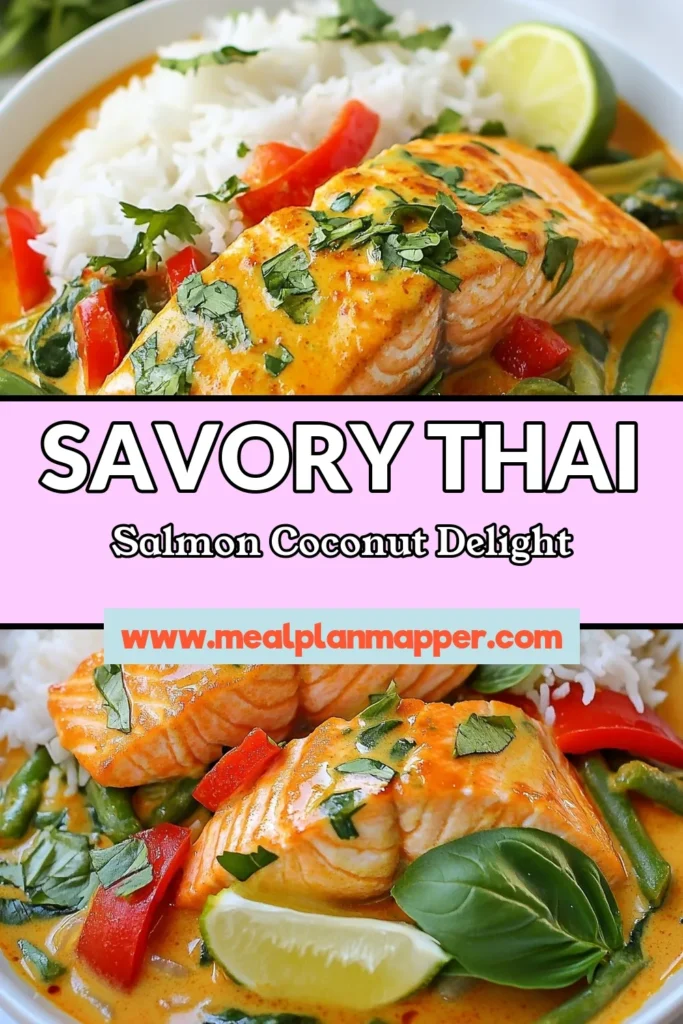
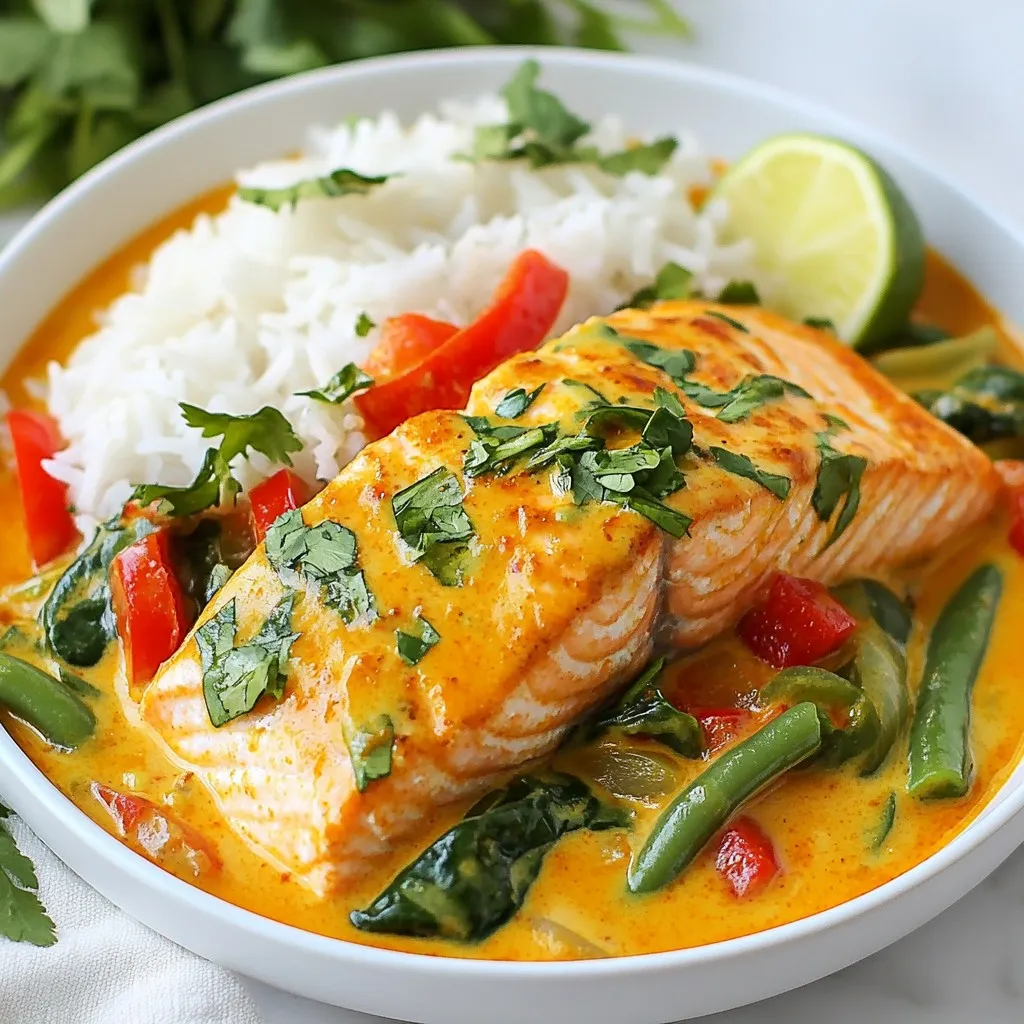
Thai Salmon Coconut Curry Flavorful Comfort Dish

WANT TO SAVE THIS RECIPE?

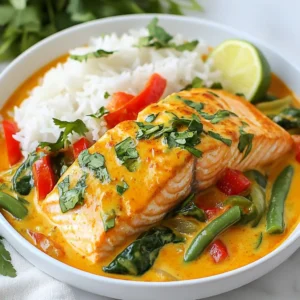
If you crave a dish that’s packed with flavor and comfort, you’ve come to the right place! My Thai Salmon Coconut Curry combines tender salmon and rich coconut milk with fresh vegetables. It’s easy to make and offers a delightful taste that warms the soul. In this post, I’ll guide you through every step, from picking the right ingredients to perfecting your curry. Let’s dive into this delicious journey together!

- 2 salmon fillets, skinless and boneless - 1 can (400ml) coconut milk - 2 tablespoons red curry paste - 1 tablespoon fish sauce - 1 tablespoon brown sugar - 1 cup vegetable broth The main ingredients create a rich, creamy dish. The salmon brings protein and healthy fats. Coconut milk adds creaminess while balancing the spices. The red curry paste provides warmth and flavor. Fish sauce offers a touch of umami. Brown sugar sweetens the dish, enhancing the flavors. Vegetable broth pulls it all together, creating a satisfying sauce. - 1 red bell pepper, sliced into thin strips - 1 cup green beans, trimmed and cut into 2-inch pieces - 1 cup fresh baby spinach - Fresh basil and cilantro leaves for garnish Adding vegetables makes the curry colorful and healthy. Red bell peppers add sweetness and crunch. Green beans give a nice texture. Baby spinach wilts down and adds nutrients. Fresh basil and cilantro bring freshness and aroma to the dish. These garnishes make your meal visually appealing and flavorful. - Cooked jasmine rice - Optional lime wedges Serving Thai Salmon Coconut Curry over jasmine rice is a must. The rice soaks up the flavorful sauce. It makes the meal filling and satisfying. You can also add lime wedges on the side. A squeeze of lime brightens the dish and adds a fresh kick. {{ingredient_image_2}} 1. Warm a drizzle of oil in a medium saucepan over medium heat. 2. Add 2 tablespoons of red curry paste. Sauté for about 1 minute. It should smell fragrant. 3. Gradually pour in 1 can of coconut milk and 1 cup of vegetable broth. Stir until smooth. 4. Let the mixture come to a gentle simmer. 1. Add 1 tablespoon of fish sauce and 1 tablespoon of brown sugar. Stir well until the sugar dissolves. 2. Once simmering, add the sliced red bell pepper and green beans. Cook for about 5 minutes. 3. Stir occasionally, and watch for the veggies to soften. 1. Carefully place 2 salmon fillets into the curry. Make sure they are submerged in the sauce. 2. Cook for 5 to 7 minutes. The salmon is ready when it flakes easily with a fork. 1. Fold in 1 cup of fresh baby spinach. Cook until the leaves are just wilted, about 1-2 minutes. 2. Remove the saucepan from heat. Stir in 2 tablespoons of fresh lime juice to brighten the flavors. 3. Serve over cooked jasmine rice. Garnish with fresh basil and cilantro leaves for a lovely touch. To make your curry just right, you can change the spice level. If you like it hot, add more red curry paste. For a milder dish, use less. Taste your curry as you cook. Adjust sweetness with brown sugar and saltiness with fish sauce. Small tweaks can make a big difference. To ensure the salmon cooks evenly, place it gently in the curry. Let it soak in the flavors. Cook it until it flakes easily, usually 5-7 minutes. Fresh ingredients are best for taste. Canned veggies can work, but fresh ones add more crunch and color. For a great look, serve in shallow bowls. This shows off the bright colors of your curry and veggies. Add jasmine rice on the side for a nice contrast. Use fresh basil and cilantro as garnishes. A lime wedge adds a pop of color and flavor. Pro Tips Fresh Ingredients: Use fresh herbs and vegetables for the best flavor in your curry. Fresh basil and cilantro will add a vibrant taste and aroma that dried herbs cannot replicate. Control the Heat: Adjust the amount of red curry paste according to your spice preference. Start with less and add more if you like it spicier! Perfectly Cooked Salmon: Keep an eye on the salmon while it cooks. Overcooking can lead to dry fish. It should flake easily when done, around 5-7 minutes in the curry. Balance the Flavors: Taste the curry before serving and adjust seasoning with more lime juice or sugar to balance the flavors to your liking. A little tweak can elevate the dish! {{image_4}} You can swap salmon for shrimp or chicken. Shrimp cooks fast and adds a nice bite. Chicken gives a hearty flavor. Both options work well with the curry sauce. For a vegan twist, use tofu. Firm tofu holds its shape in the curry. Just cut it into cubes and add it when cooking the vegetables. This change keeps the dish creamy and rich. Feel free to add your favorite veggies. Seasonal choices like zucchini or carrots can brighten the dish. They add texture and flavor. You can also use frozen vegetables if fresh ones are not available. Frozen veggies are quick and easy. Just add them when you add the salmon, and they will cook perfectly. Want to boost the taste? Try adding lemongrass. It adds a fresh, citrusy note. You can also use ginger for warmth and spice. For those who enjoy some heat, add sliced chilies. They bring a kick that balances the curry's creaminess. Adjust the amount to fit your taste. To keep your Thai salmon coconut curry fresh, store it in an airtight container. Glass or plastic containers work well. Let the curry cool to room temperature first. Then, seal the container tightly and place it in the fridge. It will stay good for about three days. Make sure to label it with the date! If you want to save the curry for later, freezing is a great option. Pour the cooled curry into freezer-safe bags or containers. Remove as much air as possible before sealing. This helps prevent freezer burn. You can freeze it for up to three months. When you're ready to eat it, thaw it in the fridge overnight. Reheat it gently on the stove or in the microwave. Stir well to make sure it heats evenly. In the fridge, your curry lasts about three days. In the freezer, it can last up to three months. Always check for signs of spoilage. If it smells off or has a strange color, toss it out. Keeping track of dates helps you enjoy your curry at its best! You can serve this dish with a few tasty sides: - Cooked jasmine rice - Steamed broccoli - Crispy spring rolls - Fresh cucumber salad - Thai-style noodles Each of these pairs well with the rich curry. The rice soaks up the sauce nicely. The spring rolls add a fun crunch. To add heat, try these tips: - Add more red curry paste. - Toss in some sliced fresh chilies. - Use a spicy fish sauce. - Serve with chili flakes on the side. Start small and taste as you go. You can always add more spice! Yes, you can use light coconut milk. The curry will have a lighter texture. It may taste less rich but still delicious. You can boost flavor by adding more curry paste or using extra veggies. Yes, this recipe is gluten-free. The main ingredients do not contain gluten: - Coconut milk - Fresh vegetables - Salmon Just ensure that your fish sauce is gluten-free. Many brands offer gluten-free options. Always check the labels for safety. Thai Salmon Coconut Curry blends rich flavors with fresh ingredients. You learned the main ingredients, from salmon and coconut milk to red curry paste and fresh veggies. The step-by-step guide simplifies the cooking process, ensuring a delicious dish every time. You now have tips to adjust flavors and present your meal beautifully. Try variations like using shrimp or tofu for a fresh twist. Remember to store leftovers properly for later enjoyment. Experiment and make this recipe your own, and enjoy a taste of Thailand at home.

Why I Love This Recipe

  1. Quick and Easy: This recipe is perfect for a busy weeknight dinner, taking just 30 minutes from start to finish.
  2. Flavorful and Aromatic: The combination of coconut milk and red curry paste creates a rich, fragrant sauce that elevates the salmon.
  3. Healthy Ingredients: Packed with nutritious vegetables and omega-3 rich salmon, this dish is as good for you as it is tasty.
  4. Customizable: You can easily swap out the vegetables or adjust the spice level to suit your taste preferences.

Ingredients

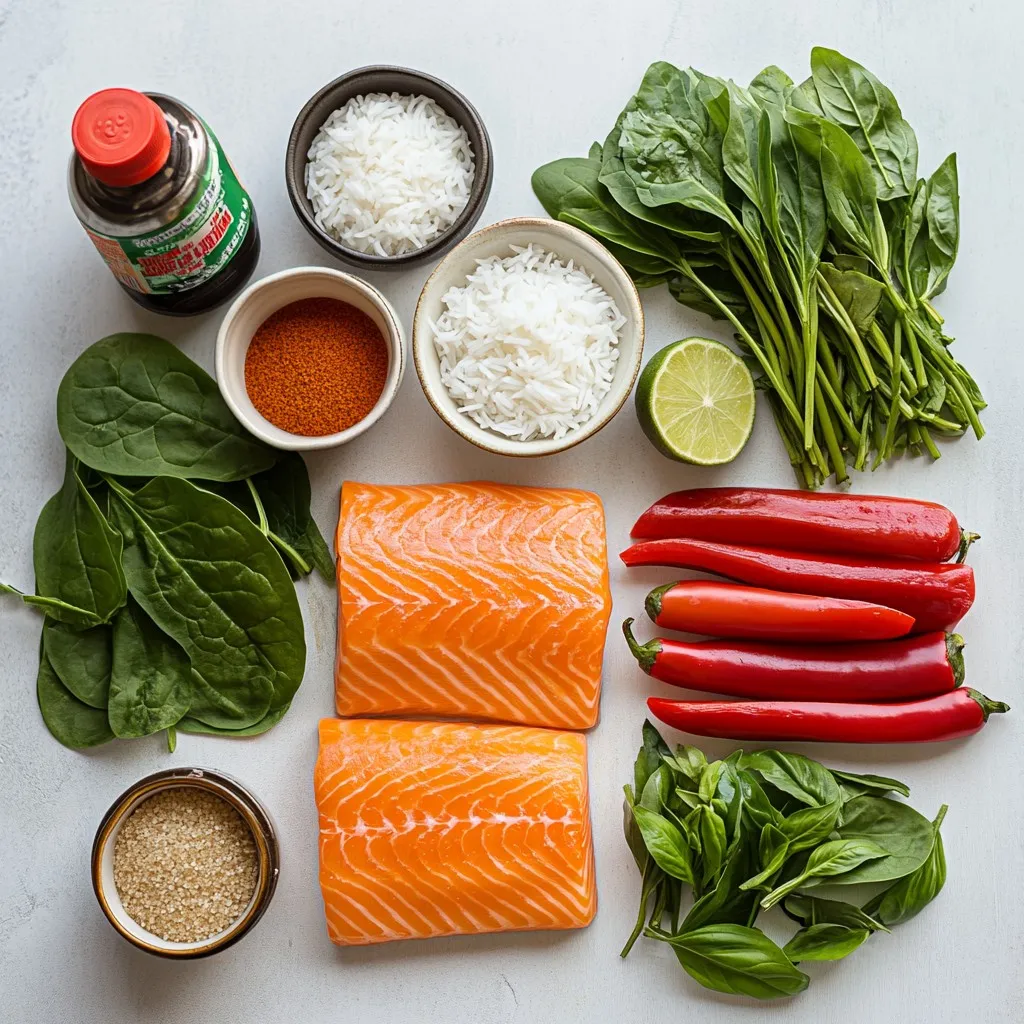
Main Ingredients for Thai Salmon Coconut Curry

– 2 salmon fillets, skinless and boneless

– 1 can (400ml) coconut milk

– 2 tablespoons red curry paste

– 1 tablespoon fish sauce

– 1 tablespoon brown sugar

– 1 cup vegetable broth

The main ingredients create a rich, creamy dish. The salmon brings protein and healthy fats. Coconut milk adds creaminess while balancing the spices. The red curry paste provides warmth and flavor. Fish sauce offers a touch of umami. Brown sugar sweetens the dish, enhancing the flavors. Vegetable broth pulls it all together, creating a satisfying sauce.

Vegetables and Garnishes

– 1 red bell pepper, sliced into thin strips

– 1 cup green beans, trimmed and cut into 2-inch pieces

– 1 cup fresh baby spinach

– Fresh basil and cilantro leaves for garnish

Adding vegetables makes the curry colorful and healthy. Red bell peppers add sweetness and crunch. Green beans give a nice texture. Baby spinach wilts down and adds nutrients. Fresh basil and cilantro bring freshness and aroma to the dish. These garnishes make your meal visually appealing and flavorful.

Serving Suggestions

– Cooked jasmine rice

– Optional lime wedges

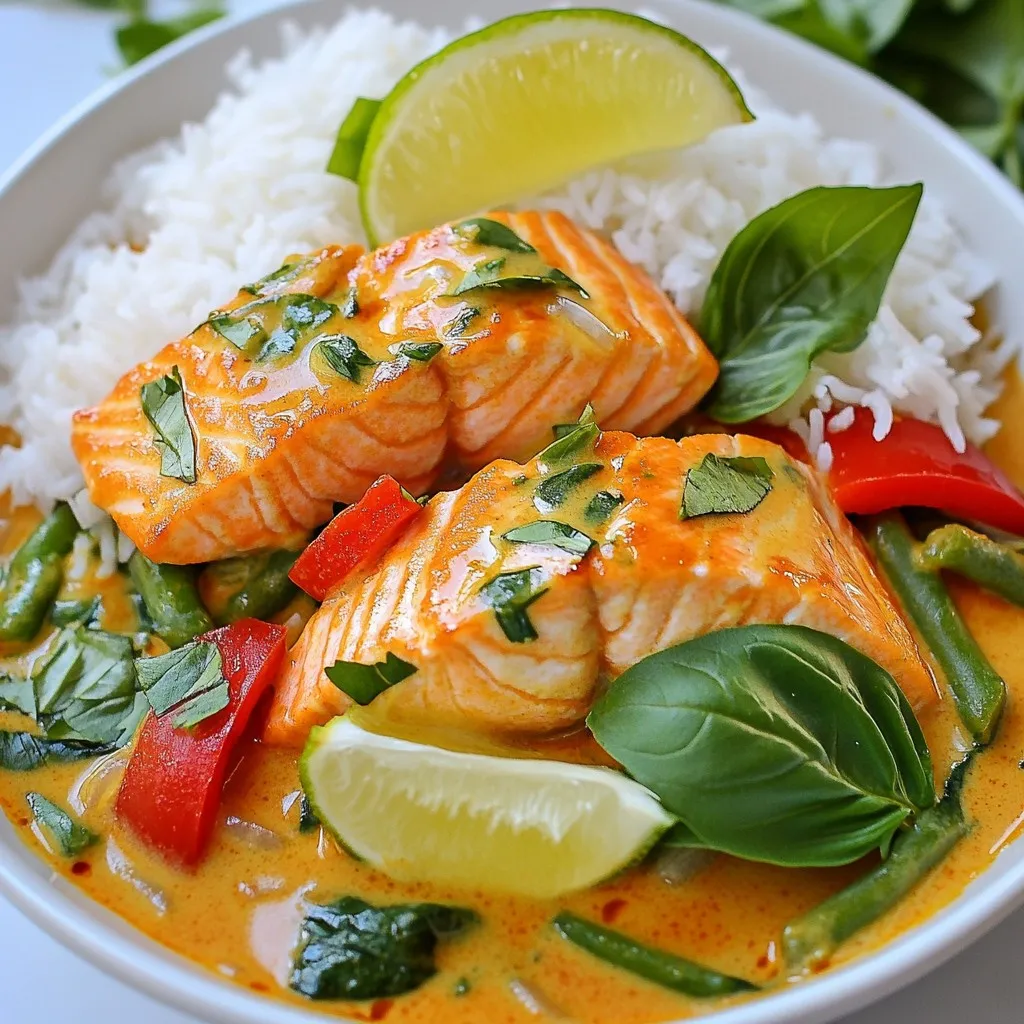
Serving Thai Salmon Coconut Curry over jasmine rice is a must. The rice soaks up the flavorful sauce. It makes the meal filling and satisfying. You can also add lime wedges on the side. A squeeze of lime brightens the dish and adds a fresh kick.

Step-by-Step Instructions

Preparing the Curry Base

1. Warm a drizzle of oil in a medium saucepan over medium heat.

2. Add 2 tablespoons of red curry paste. Sauté for about 1 minute. It should smell fragrant.

3. Gradually pour in 1 can of coconut milk and 1 cup of vegetable broth. Stir until smooth.

4. Let the mixture come to a gentle simmer.

Cooking the Vegetables

1. Add 1 tablespoon of fish sauce and 1 tablespoon of brown sugar. Stir well until the sugar dissolves.

2. Once simmering, add the sliced red bell pepper and green beans. Cook for about 5 minutes.

3. Stir occasionally, and watch for the veggies to soften.

Cooking the Salmon

1. Carefully place 2 salmon fillets into the curry. Make sure they are submerged in the sauce.

2. Cook for 5 to 7 minutes. The salmon is ready when it flakes easily with a fork.

Final Touches

1. Fold in 1 cup of fresh baby spinach. Cook until the leaves are just wilted, about 1-2 minutes.

2. Remove the saucepan from heat. Stir in 2 tablespoons of fresh lime juice to brighten the flavors.

3. Serve over cooked jasmine rice. Garnish with fresh basil and cilantro leaves for a lovely touch.

Tips & Tricks

Perfecting the Curry Flavor

To make your curry just right, you can change the spice level. If you like it hot, add more red curry paste. For a milder dish, use less. Taste your curry as you cook. Adjust sweetness with brown sugar and saltiness with fish sauce. Small tweaks can make a big difference.

Cooking Techniques

To ensure the salmon cooks evenly, place it gently in the curry. Let it soak in the flavors. Cook it until it flakes easily, usually 5-7 minutes. Fresh ingredients are best for taste. Canned veggies can work, but fresh ones add more crunch and color.

Presentation Tips

For a great look, serve in shallow bowls. This shows off the bright colors of your curry and veggies. Add jasmine rice on the side for a nice contrast. Use fresh basil and cilantro as garnishes. A lime wedge adds a pop of color and flavor.

Pro Tips

  1. Fresh Ingredients: Use fresh herbs and vegetables for the best flavor in your curry. Fresh basil and cilantro will add a vibrant taste and aroma that dried herbs cannot replicate.
  2. Control the Heat: Adjust the amount of red curry paste according to your spice preference. Start with less and add more if you like it spicier!
  3. Perfectly Cooked Salmon: Keep an eye on the salmon while it cooks. Overcooking can lead to dry fish. It should flake easily when done, around 5-7 minutes in the curry.
  4. Balance the Flavors: Taste the curry before serving and adjust seasoning with more lime juice or sugar to balance the flavors to your liking. A little tweak can elevate the dish!

Variations

Alternative Proteins

You can swap salmon for shrimp or chicken. Shrimp cooks fast and adds a nice bite. Chicken gives a hearty flavor. Both options work well with the curry sauce. For a vegan twist, use tofu. Firm tofu holds its shape in the curry. Just cut it into cubes and add it when cooking the vegetables. This change keeps the dish creamy and rich.

Customizing Vegetables

Feel free to add your favorite veggies. Seasonal choices like zucchini or carrots can brighten the dish. They add texture and flavor. You can also use frozen vegetables if fresh ones are not available. Frozen veggies are quick and easy. Just add them when you add the salmon, and they will cook perfectly.

Flavor Enhancements

Want to boost the taste? Try adding lemongrass. It adds a fresh, citrusy note. You can also use ginger for warmth and spice. For those who enjoy some heat, add sliced chilies. They bring a kick that balances the curry’s creaminess. Adjust the amount to fit your taste.

Storage Info

Storing Leftovers

To keep your Thai salmon coconut curry fresh, store it in an airtight container. Glass or plastic containers work well. Let the curry cool to room temperature first. Then, seal the container tightly and place it in the fridge. It will stay good for about three days. Make sure to label it with the date!

Freezing Instructions

If you want to save the curry for later, freezing is a great option. Pour the cooled curry into freezer-safe bags or containers. Remove as much air as possible before sealing. This helps prevent freezer burn. You can freeze it for up to three months. When you’re ready to eat it, thaw it in the fridge overnight. Reheat it gently on the stove or in the microwave. Stir well to make sure it heats evenly.

Shelf Life

In the fridge, your curry lasts about three days. In the freezer, it can last up to three months. Always check for signs of spoilage. If it smells off or has a strange color, toss it out. Keeping track of dates helps you enjoy your curry at its best!

FAQs

What can I serve with Thai Salmon Coconut Curry?

You can serve this dish with a few tasty sides:

– Cooked jasmine rice

– Steamed broccoli

– Crispy spring rolls

– Fresh cucumber salad

– Thai-style noodles

Each of these pairs well with the rich curry. The rice soaks up the sauce nicely. The spring rolls add a fun crunch.

How can I make it spicy?

To add heat, try these tips:

– Add more red curry paste.

– Toss in some sliced fresh chilies.

– Use a spicy fish sauce.

– Serve with chili flakes on the side.

Start small and taste as you go. You can always add more spice!

Can I use light coconut milk?

Yes, you can use light coconut milk. The curry will have a lighter texture. It may taste less rich but still delicious. You can boost flavor by adding more curry paste or using extra veggies.

Is this recipe gluten-free?

Yes, this recipe is gluten-free. The main ingredients do not contain gluten:

– Coconut milk

– Fresh vegetables

– Salmon

Just ensure that your fish sauce is gluten-free. Many brands offer gluten-free options. Always check the labels for safety.

Thai Salmon Coconut Curry blends rich flavors with fresh ingredients. You learned the main ingredients, from salmon and coconut milk to red curry paste and fresh veggies. The step-by-step guide simplifies the cooking process, ensuring a delicious dish every time. You now have tips to adjust flavors and present your meal beautifully. Try variations like using shrimp or tofu for a fresh twist. Remember to store leftovers properly for later enjoyment. Experiment and make this recipe your own, and enjoy a taste of Thailand at hom

- 2 salmon fillets, skinless and boneless - 1 can (400ml) coconut milk - 2 tablespoons red curry paste - 1 tablespoon fish sauce - 1 tablespoon brown sugar - 1 cup vegetable broth The main ingredients create a rich, creamy dish. The salmon brings protein and healthy fats. Coconut milk adds creaminess while balancing the spices. The red curry paste provides warmth and flavor. Fish sauce offers a touch of umami. Brown sugar sweetens the dish, enhancing the flavors. Vegetable broth pulls it all together, creating a satisfying sauce. - 1 red bell pepper, sliced into thin strips - 1 cup green beans, trimmed and cut into 2-inch pieces - 1 cup fresh baby spinach - Fresh basil and cilantro leaves for garnish Adding vegetables makes the curry colorful and healthy. Red bell peppers add sweetness and crunch. Green beans give a nice texture. Baby spinach wilts down and adds nutrients. Fresh basil and cilantro bring freshness and aroma to the dish. These garnishes make your meal visually appealing and flavorful. - Cooked jasmine rice - Optional lime wedges Serving Thai Salmon Coconut Curry over jasmine rice is a must. The rice soaks up the flavorful sauce. It makes the meal filling and satisfying. You can also add lime wedges on the side. A squeeze of lime brightens the dish and adds a fresh kick. {{ingredient_image_2}} 1. Warm a drizzle of oil in a medium saucepan over medium heat. 2. Add 2 tablespoons of red curry paste. Sauté for about 1 minute. It should smell fragrant. 3. Gradually pour in 1 can of coconut milk and 1 cup of vegetable broth. Stir until smooth. 4. Let the mixture come to a gentle simmer. 1. Add 1 tablespoon of fish sauce and 1 tablespoon of brown sugar. Stir well until the sugar dissolves. 2. Once simmering, add the sliced red bell pepper and green beans. Cook for about 5 minutes. 3. Stir occasionally, and watch for the veggies to soften. 1. Carefully place 2 salmon fillets into the curry. Make sure they are submerged in the sauce. 2. Cook for 5 to 7 minutes. The salmon is ready when it flakes easily with a fork. 1. Fold in 1 cup of fresh baby spinach. Cook until the leaves are just wilted, about 1-2 minutes. 2. Remove the saucepan from heat. Stir in 2 tablespoons of fresh lime juice to brighten the flavors. 3. Serve over cooked jasmine rice. Garnish with fresh basil and cilantro leaves for a lovely touch. To make your curry just right, you can change the spice level. If you like it hot, add more red curry paste. For a milder dish, use less. Taste your curry as you cook. Adjust sweetness with brown sugar and saltiness with fish sauce. Small tweaks can make a big difference. To ensure the salmon cooks evenly, place it gently in the curry. Let it soak in the flavors. Cook it until it flakes easily, usually 5-7 minutes. Fresh ingredients are best for taste. Canned veggies can work, but fresh ones add more crunch and color. For a great look, serve in shallow bowls. This shows off the bright colors of your curry and veggies. Add jasmine rice on the side for a nice contrast. Use fresh basil and cilantro as garnishes. A lime wedge adds a pop of color and flavor. Pro Tips Fresh Ingredients: Use fresh herbs and vegetables for the best flavor in your curry. Fresh basil and cilantro will add a vibrant taste and aroma that dried herbs cannot replicate. Control the Heat: Adjust the amount of red curry paste according to your spice preference. Start with less and add more if you like it spicier! Perfectly Cooked Salmon: Keep an eye on the salmon while it cooks. Overcooking can lead to dry fish. It should flake easily when done, around 5-7 minutes in the curry. Balance the Flavors: Taste the curry before serving and adjust seasoning with more lime juice or sugar to balance the flavors to your liking. A little tweak can elevate the dish! {{image_4}} You can swap salmon for shrimp or chicken. Shrimp cooks fast and adds a nice bite. Chicken gives a hearty flavor. Both options work well with the curry sauce. For a vegan twist, use tofu. Firm tofu holds its shape in the curry. Just cut it into cubes and add it when cooking the vegetables. This change keeps the dish creamy and rich. Feel free to add your favorite veggies. Seasonal choices like zucchini or carrots can brighten the dish. They add texture and flavor. You can also use frozen vegetables if fresh ones are not available. Frozen veggies are quick and easy. Just add them when you add the salmon, and they will cook perfectly. Want to boost the taste? Try adding lemongrass. It adds a fresh, citrusy note. You can also use ginger for warmth and spice. For those who enjoy some heat, add sliced chilies. They bring a kick that balances the curry's creaminess. Adjust the amount to fit your taste. To keep your Thai salmon coconut curry fresh, store it in an airtight container. Glass or plastic containers work well. Let the curry cool to room temperature first. Then, seal the container tightly and place it in the fridge. It will stay good for about three days. Make sure to label it with the date! If you want to save the curry for later, freezing is a great option. Pour the cooled curry into freezer-safe bags or containers. Remove as much air as possible before sealing. This helps prevent freezer burn. You can freeze it for up to three months. When you're ready to eat it, thaw it in the fridge overnight. Reheat it gently on the stove or in the microwave. Stir well to make sure it heats evenly. In the fridge, your curry lasts about three days. In the freezer, it can last up to three months. Always check for signs of spoilage. If it smells off or has a strange color, toss it out. Keeping track of dates helps you enjoy your curry at its best! You can serve this dish with a few tasty sides: - Cooked jasmine rice - Steamed broccoli - Crispy spring rolls - Fresh cucumber salad - Thai-style noodles Each of these pairs well with the rich curry. The rice soaks up the sauce nicely. The spring rolls add a fun crunch. To add heat, try these tips: - Add more red curry paste. - Toss in some sliced fresh chilies. - Use a spicy fish sauce. - Serve with chili flakes on the side. Start small and taste as you go. You can always add more spice! Yes, you can use light coconut milk. The curry will have a lighter texture. It may taste less rich but still delicious. You can boost flavor by adding more curry paste or using extra veggies. Yes, this recipe is gluten-free. The main ingredients do not contain gluten: - Coconut milk - Fresh vegetables - Salmon Just ensure that your fish sauce is gluten-free. Many brands offer gluten-free options. Always check the labels for safety. Thai Salmon Coconut Curry blends rich flavors with fresh ingredients. You learned the main ingredients, from salmon and coconut milk to red curry paste and fresh veggies. The step-by-step guide simplifies the cooking process, ensuring a delicious dish every time. You now have tips to adjust flavors and present your meal beautifully. Try variations like using shrimp or tofu for a fresh twist. Remember to store leftovers properly for later enjoyment. Experiment and make this recipe your own, and enjoy a taste of Thailand at home.

Thai Salmon Coconut Curry

A fragrant and creamy curry featuring salmon, coconut milk, and fresh vegetables.
Prep Time 10 minutes
Cook Time 20 minutes
Total Time 30 minutes
Course Main Course
Cuisine Thai
Servings 2
Calories 450 kcal

Ingredients
  

  • 2 fillets salmon, skinless and boneless
  • 1 can coconut milk (400ml)
  • 2 tablespoons red curry paste
  • 1 tablespoon fish sauce
  • 1 tablespoon brown sugar
  • 1 cup vegetable broth
  • 1 piece red bell pepper, sliced into thin strips
  • 1 cup green beans, trimmed and cut into 2-inch pieces
  • 1 cup fresh baby spinach
  • 2 tablespoons fresh lime juice
  • to taste fresh basil and cilantro leaves for garnish
  • to serve cooked jasmine rice

Instructions
 

  • In a medium saucepan, warm a drizzle of oil over medium heat. Once hot, add the red curry paste, and sauté for about 1 minute until it becomes fragrant and aromatic.
  • Gradually pour in the coconut milk and vegetable broth, stirring well to combine all ingredients smoothly. Allow the mixture to come to a gentle simmer.
  • Add in the fish sauce and brown sugar, stirring continuously until the sugar has completely dissolved into the curry base.
  • Once simmering again, gently introduce the sliced red bell pepper and the trimmed green beans into the pan. Cook for approximately 5 minutes, stirring occasionally, until the vegetables start to soften.
  • Carefully add the salmon fillets into the curry, ensuring they are submerged in the sauce. Cook for 5-7 minutes, or until the salmon is cooked through and flakes easily when tested with a fork.
  • Fold in the fresh baby spinach, cooking just until the leaves are wilted, which should take about 1-2 minutes.
  • Remove the saucepan from the heat, then stir in the fresh lime juice to enhance the dish's bright flavors and aromas.
  • To serve, place a generous portion of jasmine rice in each bowl and ladle the fragrant curry over the top. Garnish with fresh basil and cilantro leaves for added color and flavor.

Notes

For an attractive presentation, use a shallow bowl to show off the vibrant colors of the curry and vegetables, and consider adding an extra wedge of lime on the side for guests to squeeze over their dish.
Keyword coconut curry, healthy, quick meal, salmon, Thai cuisine

WANT TO SAVE THIS RECIPE?