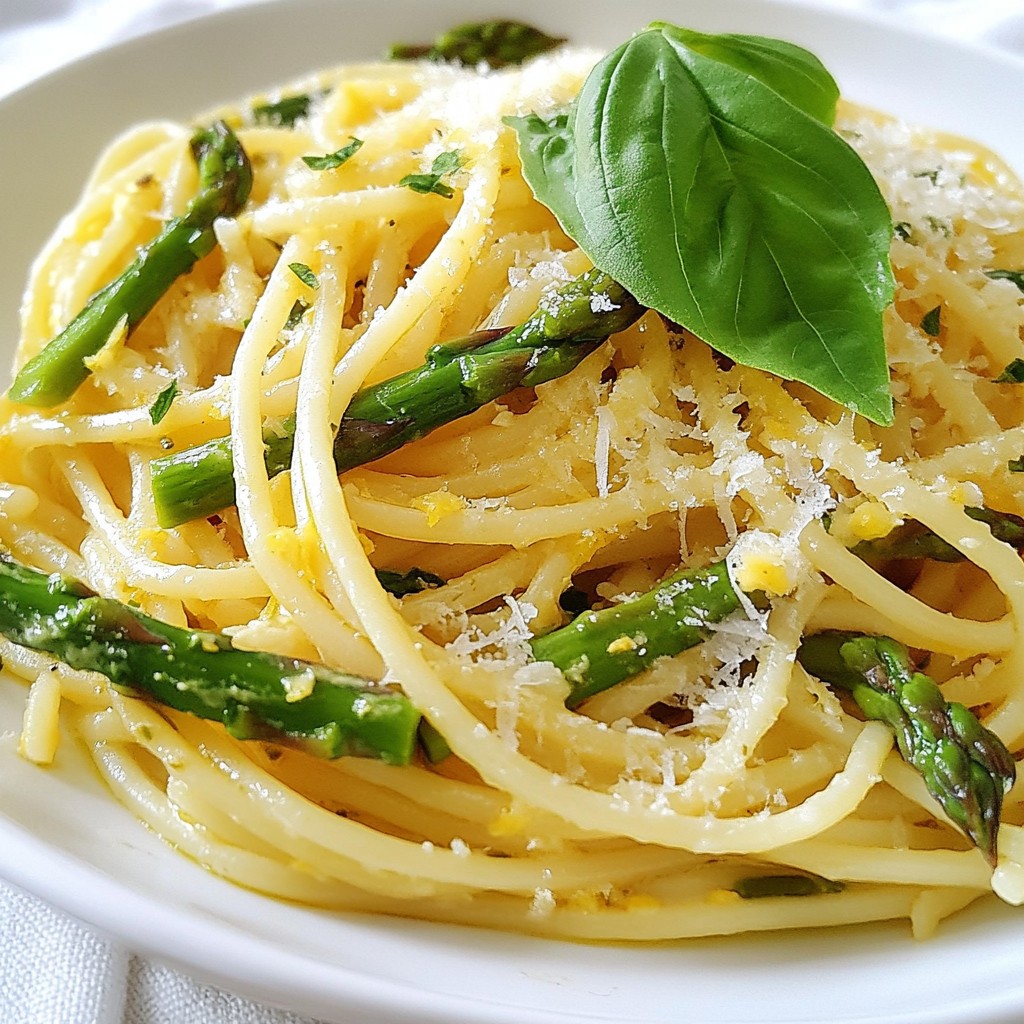
Ready for a quick and tasty meal? Lemon Garlic Asparagus Pasta is the perfect choice! This dish combines pasta, fresh asparagus, and zesty lemon to create a burst of flavor in every bite. Whether you’re cooking for yourself or impressing guests, this easy recipe has you covered. In just a few steps, you’ll be enjoying a delightful plate that’s both healthy and satisfying. Let’s dive into the ingredients and get cooking!
Why I Love This Recipe
- Fresh and Light: This pasta dish is bursting with fresh flavors from the asparagus and lemon, making it a perfect light meal.
- Quick and Easy: With only 25 minutes from start to finish, this recipe is perfect for busy weeknights.
- Versatile: You can easily customize this dish by adding your favorite proteins or other vegetables.
- Healthy Ingredients: Rich in vitamins and minerals, this dish is a nutritious option that doesn't skimp on flavor.
Ingredients
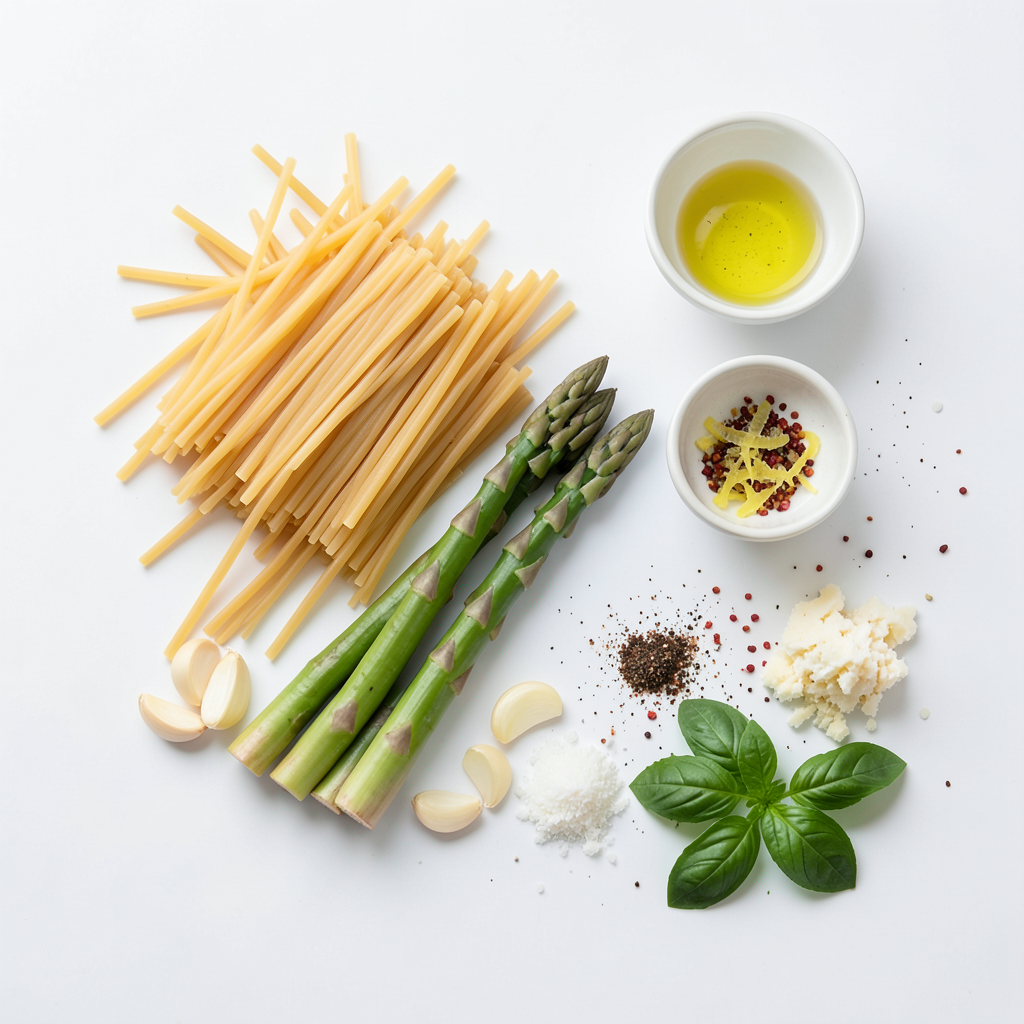
To make Lemon Garlic Asparagus Pasta, you'll need a few fresh and tasty items. Here’s the list:
- 8 oz spaghetti or fettuccine
- 1 bunch fresh asparagus, trimmed and cut into 2-inch pieces
- 4 cloves garlic, thinly sliced
- 3 tablespoons olive oil
- Zest and juice of 1 lemon
- 1/2 teaspoon red pepper flakes (optional)
- Salt and pepper to taste
- 1/4 cup grated Parmesan cheese (or nutritional yeast for a vegan option)
- Fresh basil leaves, torn
Gather these ingredients before you start cooking. Using fresh asparagus and good-quality olive oil gives the dish a bright flavor. The lemon juice adds a zing that balances the rich cheese. You can adjust the red pepper flakes based on your heat preference. Remember, using nutritional yeast ensures the dish stays vegan while still being delicious. Enjoy the process of preparing this meal as you savor the fresh smells and vibrant colors!
Step-by-Step Instructions
Cooking the Pasta
First, fill a large pot with water. Add a good amount of salt. Bring the water to a boil. Add 8 oz of spaghetti or fettuccine. Cook it according to the package instructions until it is al dente. Before draining, remember to reserve 1 cup of the pasta water. This water helps later. Drain the pasta and set it aside.
Sautéing the Asparagus
Next, grab a large skillet. Heat 2 tablespoons of olive oil over medium heat. Once hot, add the asparagus pieces. Cook them for about 3 to 4 minutes. You want them bright green and tender but still crisp. When done, transfer the asparagus to a plate and set it aside.
Garlic Preparation
In the same skillet, add the last tablespoon of olive oil. Heat it up. Now, add 4 cloves of thinly sliced garlic. If you like spice, add 1/2 teaspoon of red pepper flakes. Sauté this mix for 1 to 2 minutes. Stir often to avoid burning the garlic. Burnt garlic turns bitter.
Combining Ingredients
Once the garlic is fragrant, return the asparagus to the skillet. Then, add the reserved pasta and mix them well. Pour in the fresh lemon juice and zest. Toss everything together. If the pasta looks dry, slowly add some of the reserved pasta water. Keep mixing until you reach a creamy texture.
Seasoning the Dish
Now, add salt and pepper to taste. Stir everything well to make sure all the flavors spread evenly. This step is key to a tasty dish.
Final Touches
Finally, turn off the heat. Sprinkle 1/4 cup of grated Parmesan cheese over the pasta. If you're vegan, use nutritional yeast instead. Gently toss everything to combine. This helps the cheese melt and blend in well. You’re almost ready to serve!
Tips & Tricks
Perfect Pasta Cooking
To make perfect pasta, cook it until it's al dente. This means it should be firm but not hard. The best way to check is to taste a piece before draining.
Always reserve some pasta water. This starchy water can help make your sauce creamy. Just scoop out a cup before you drain the pasta.
Enhancing Flavor
Use fresh ingredients for the best taste. Fresh garlic and asparagus will add vibrant flavors. You can also adjust the lemon and garlic levels. If you love lemon, add more zest and juice. For garlic lovers, extra slices can boost the taste.
Presentation Suggestions
Garnishing is a fun way to make your dish look great. Fresh basil leaves add color and taste. Place them on top right before serving.
Serve the pasta in styled plates. A nice bowl can make a simple meal feel special. Enjoying your food visually adds to the whole experience!
Pro Tips
- Fresh Asparagus is Key: Choose firm, bright green asparagus for the best flavor and texture. Avoid any that look wilted or have a dull color.
- Perfect Pasta Texture: Cooking pasta to al dente ensures it holds up well when mixed with the sauce, avoiding a mushy texture.
- Garlic Timing: Keep an eye on the garlic as it cooks; it can go from golden to burnt quickly. Stir frequently to achieve the perfect golden-brown color.
- Customize Your Cheese: Try different cheeses like feta or goat cheese for a unique twist, or omit cheese entirely for a lighter dish.
Variations
Adding Proteins
You can boost your Lemon Garlic Asparagus Pasta by adding protein. Chicken, shrimp, or tofu are great choices. For chicken, grill or sauté it until cooked through. For shrimp, cook them until they turn pink. If you prefer tofu, sauté it until golden brown. Add these proteins to the pasta right before you toss everything together. This change makes the dish heartier and more filling.
Vegan Alternatives
If you want a vegan meal, there are easy swaps. Instead of Parmesan cheese, use nutritional yeast. It adds a cheesy flavor without dairy. You can also add more veggies for extra nutrition. Try bell peppers, cherry tomatoes, or spinach. These options add color and taste to your dish, making it even more delightful.
Flavor Variations
Experiment with herbs and spices to change flavors. Fresh herbs like parsley or thyme can add a nice touch. You can also try adding spices like paprika or cayenne for heat. Another idea is to add a splash of soy sauce or balsamic vinegar. These options can enhance the dish and make it unique every time you cook it.
Storage Info
Refrigeration
To store leftovers, let the pasta cool first. Then, transfer it to an airtight container. This keeps it fresh and tasty. You can store it in the fridge for up to three days. After that, the flavors may start to fade.
Reheating Instructions
When reheating pasta, you have a few options. You can use a microwave or a stovetop. If you use a microwave, place the pasta in a bowl. Add a splash of water to keep it moist. Heat it in short bursts and stir often.
For stovetop reheating, place the pasta in a skillet. Add a little olive oil or butter to keep it from sticking. Heat it over medium-low until warmed through. This method helps maintain flavor and texture. Always taste before serving to ensure it's just right.
FAQs
Can I use different types of pasta?
Yes, you can use many types of pasta. Spaghetti and fettuccine are great choices. You can also try penne, linguine, or even whole wheat pasta. Each type brings a unique texture and flavor. Just make sure to adjust the cooking time based on your pasta choice.
How can I make this dish spicier?
To add heat, use more red pepper flakes. You can also try crushed red pepper or hot sauce. Mix in diced jalapeños for a fresh kick. Adjust the amount to suit your taste. Remember, a little spice can go a long way!
Can I prepare this in advance?
Yes, you can meal prep this dish. Cook the pasta and asparagus ahead of time. Store them separately in the fridge. When ready to eat, just reheat and mix with the sauce. This helps save time on busy days.
You now have a simple, fresh pasta dish ready to enjoy. We covered every step, from cooking al dente pasta to adding seasonal flavors. Remember, using fresh ingredients makes a big difference. Explore variations with different proteins or spices to make the dish your own. Store leftovers properly to keep them tasty. Try reheating with a splash of reserved pasta water for the best texture. Enjoy your cooking journey and make this dish a regular at your table!