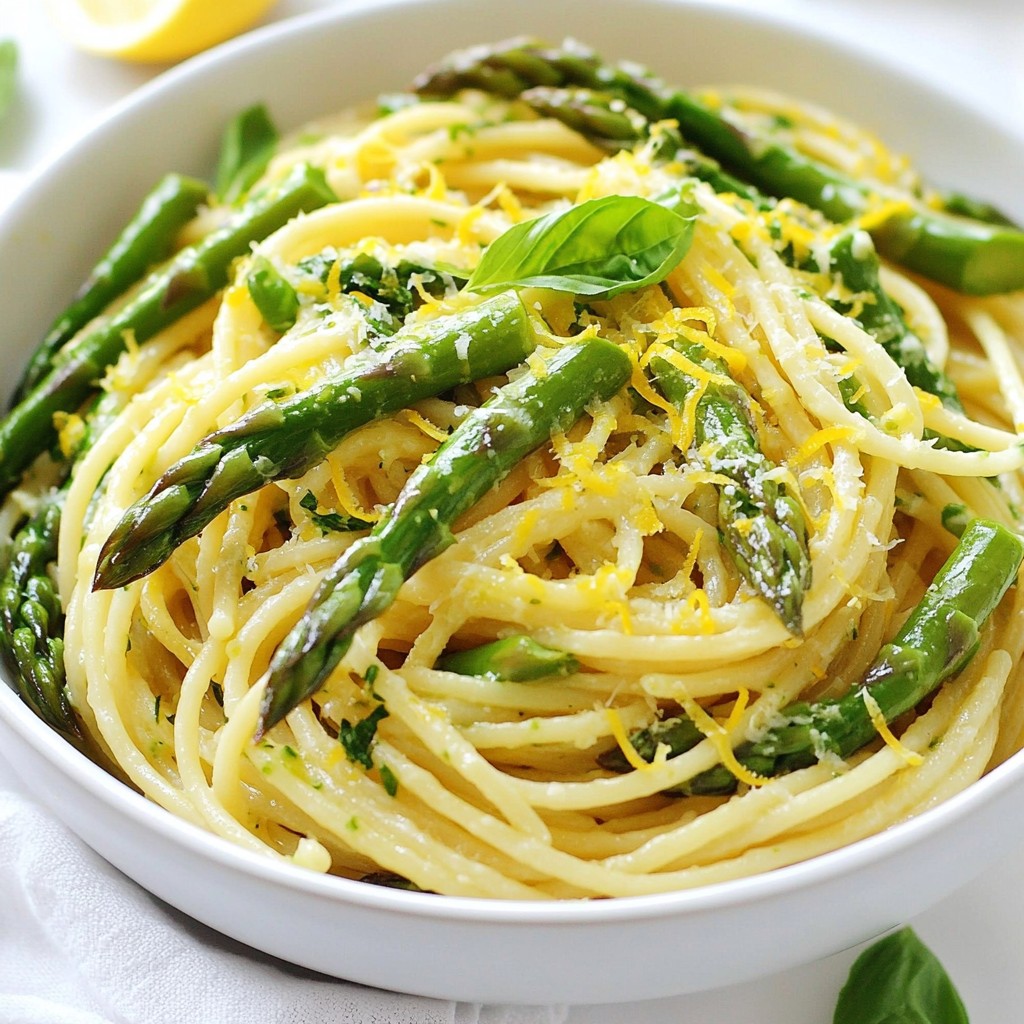
Are you ready to whip up a dish that’s both tasty and simple? Lemon Garlic Asparagus Pasta bursts with fresh flavors and quick prep. You can create a delightful meal with just a few key ingredients, like asparagus and garlic. Whether you’re a seasoned cook or a beginner, this recipe is straightforward and rewarding. Let’s dive into the steps to make this vibrant dish that will impress anyone at your table!
Why I Love This Recipe
- Fresh and Vibrant: This dish showcases the fresh taste of asparagus, perfectly complemented by the bright lemon and fragrant garlic, making it a refreshing choice any time of year.
- Quick and Easy: With just a few simple ingredients and a cooking time of 20 minutes, this pasta is perfect for busy weeknights or last-minute gatherings.
- Customizable: You can easily adjust the spice level with red pepper flakes or add more veggies, making it a versatile recipe that can cater to different tastes.
- Healthful and Delicious: This Lemon Garlic Asparagus Pasta is not only packed with flavor but also loaded with nutrients, making it a wholesome meal option.
Ingredients
Main Ingredients
- 8 ounces spaghetti or fettuccine
- 1 bunch fresh asparagus, trimmed and cut into 2-inch pieces
- 4 cloves garlic, minced
- 2 tablespoons extra virgin olive oil
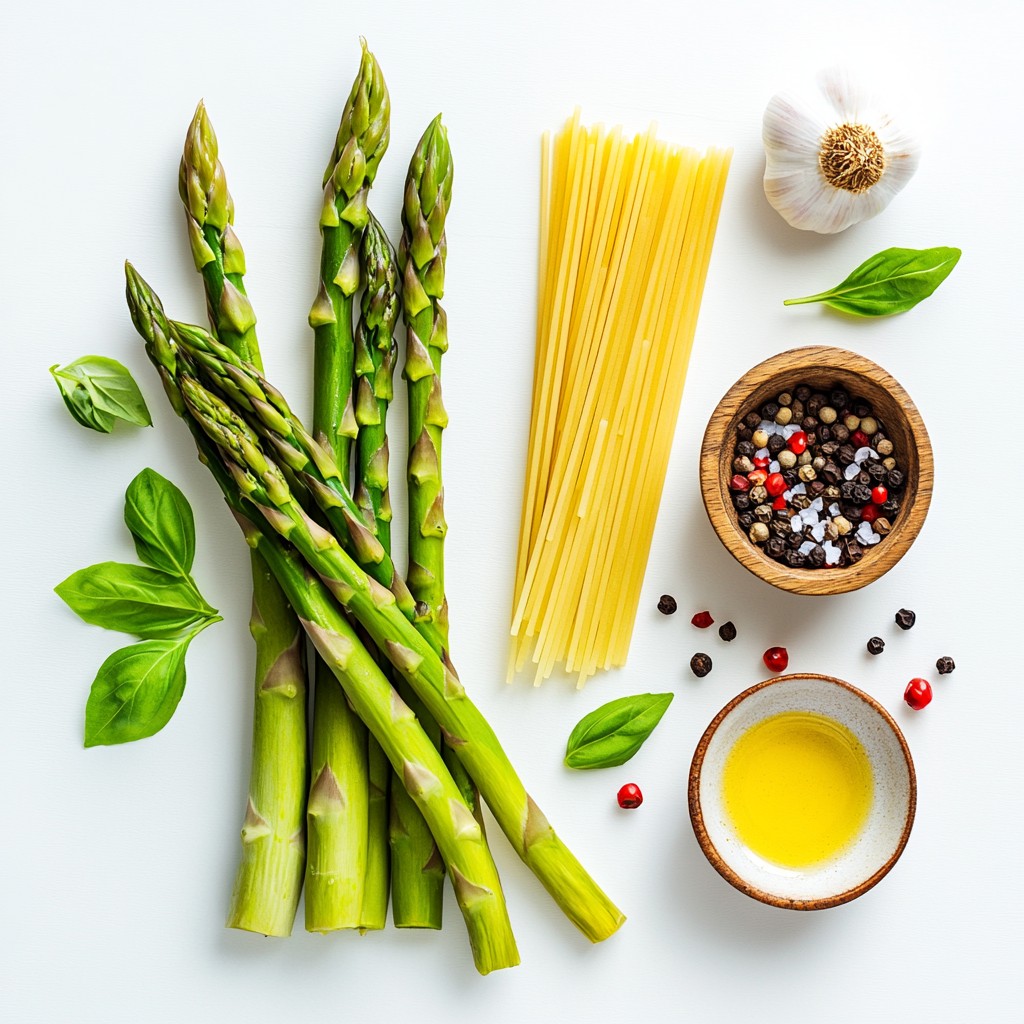
For this dish, I love using spaghetti or fettuccine. They hold the sauce well and offer a nice bite. Fresh asparagus adds a crisp texture and bright color. Garlic brings depth and flavor, while extra virgin olive oil adds richness.
Seasoning and Garnishing
- Zest and juice of 1 large lemon
- 1/2 teaspoon red pepper flakes (optional, adjust for spice)
- Sea salt and freshly cracked black pepper to taste
- 1/4 cup freshly grated Parmesan cheese (optional)
- Fresh basil leaves for garnish
Lemon zest and juice brighten the dish and give it a fresh taste. Red pepper flakes add a kick, but you can skip them if you prefer milder flavors. Season with sea salt and black pepper to enhance all the tastes. If you like cheese, sprinkle some Parmesan on top. Fresh basil leaves finish the dish perfectly, adding a lovely aroma and color.
Step-by-Step Instructions
Cooking the Pasta
1. Boil salted water: Start by filling a large pot with water. Add a good amount of salt. This will help flavor the pasta as it cooks. Bring the water to a rolling boil.
2. Al dente cooking tips: Add 8 ounces of spaghetti or fettuccine to the boiling water. Cook according to the package directions. To check if it's done, taste a piece. It should be firm yet tender—this is called "al dente."
3. Reserve pasta water: Before draining the pasta, scoop out about 1/2 cup of the cooking water. This starchy water helps bind the sauce later. Drain the pasta and keep it warm in a bowl.
Sautéing Asparagus and Garlic
1. Heating olive oil: In a large skillet, pour in 2 tablespoons of extra virgin olive oil. Heat it over medium heat until it shimmers.
2. Tips for sautéing asparagus: Trim the asparagus and cut it into 2-inch pieces. Add the asparagus to the skillet. Sauté for about 3 to 4 minutes. Stir often. You want it bright green and tender but still crisp.
3. Incorporating garlic: Next, add 4 minced garlic cloves and 1/2 teaspoon of red pepper flakes (if you like some heat). Sauté for another 1 to 2 minutes. The garlic should smell great but not brown.
Combining Ingredients
1. Mixing pasta and vegetables: Add the warm pasta to the skillet with the asparagus. Toss them together gently so they mix well.
2. Adjusting consistency with pasta water: Pour in the reserved pasta water along with the zest and juice of 1 large lemon. This helps the sauce cling to the pasta.
3. Flavor melding tips: Toss everything together and let it cook for another minute. This allows the flavors to blend. Taste it and add sea salt and black pepper as needed.
Tips & Tricks
Perfecting Texture
To cook asparagus just right, start with bright green color. You should sauté it for about 3 to 4 minutes. This keeps the asparagus crisp. If it gets too soft, it loses its charm.
When you add garlic, time it well. Garlic only needs about 1 to 2 minutes in the pan. Stir it often to keep it from burning. Burnt garlic can ruin the taste of your dish.
Enhancing Flavor
Adjust the salt and spice to your taste. Start with a little salt. You can add more later if needed. The same goes for red pepper flakes. If you like heat, add more. If not, skip it altogether!
Garnishes can add fun. A sprinkle of Parmesan cheese gives a nice touch. Fresh basil leaves on top make it look great. You can also add a bit of lemon zest for extra zing.
Serving Suggestions
For a nice presentation, use shallow bowls. Drizzle some olive oil on top for shine. A little extra lemon zest adds color. Also, a lemon wedge on the side looks inviting.
Consider serving this pasta with a simple salad. A light salad pairs well and adds freshness. You might also enjoy it with crusty bread for a complete meal.
Pro Tips
- Use Fresh Asparagus: For the best flavor and texture, choose fresh asparagus that is bright green and firm. Avoid any that looks wilted or has a strong odor.
- Cook Pasta Al Dente: Cooking your pasta just until al dente ensures it retains a nice bite and doesn't become mushy when combined with the sauce.
- Reserve Pasta Water: Always reserve some pasta cooking water before draining. It can help to loosen the sauce and add creaminess to your dish.
- Enhance Flavor with Lemon Zest: Don't skip the lemon zest! It adds a fresh, aromatic layer of flavor that brightens the entire dish.
Variations
Protein Add-Ins
You can boost this dish with protein. Options include chicken, shrimp, or tofu.
- Chicken: Cook diced chicken in the skillet until golden. Add it with the asparagus for a tasty mix.
- Shrimp: Sauté shrimp in olive oil until pink. Toss them in just before serving for a quick meal.
- Tofu: Use firm tofu, cut into cubes. Sauté until golden before mixing it in with the pasta.
These add-ins make the dish heartier and more satisfying.
Vegan Modifications
You can easily make this dish vegan. Just swap out a few ingredients for dairy-free ones.
- Dairy-free alternatives: Use nutritional yeast instead of Parmesan. It adds a cheesy flavor without the dairy.
- Plant-based cheese: Try your favorite plant-based cheese for a creamy finish. Look for options that melt well.
These changes keep the dish tasty while fitting vegan diets.
Seasonal Ingredients
Feel free to customize this recipe with seasonal vegetables. Different veggies add variety and flavor.
- Other vegetables: Try bell peppers, cherry tomatoes, or spinach. These can give a fresh twist to the dish.
- Customizing for different seasons: In spring, use peas or artichokes. In fall, add roasted squash for a cozy touch.
These variations keep the dish exciting all year round.
Storage Info
Refrigeration Tips
To store leftovers, let the pasta cool down first. Place it in an airtight container. This keeps it fresh for up to three days. Make sure to separate the pasta from the sauce if possible. This helps avoid soggy noodles.
For best results, use glass or BPA-free plastic containers. These materials keep your food safe and tasty. Label your containers with the date. This way, you know when to eat them.
Reheating Methods
For reheating pasta, use a skillet or microwave. If using a skillet, add a splash of water or olive oil. Heat over low to medium heat, stirring often. This keeps the pasta moist.
If you choose the microwave, cover the dish with a lid or a damp paper towel. Heat in short bursts, stirring in between. This helps avoid mushiness. Always check the temperature before serving. Enjoy your delicious leftovers!
FAQs
Can I use frozen asparagus?
Yes, you can use frozen asparagus. Simply thaw it before cooking. When using frozen veggies, keep these tips in mind:
- Thaw completely: Let frozen asparagus sit in the fridge overnight or run it under cold water.
- Adjust cooking time: Frozen asparagus cooks faster than fresh. Sauté for just 2–3 minutes.
- Check for water: Frozen asparagus may release water. Pat dry if needed to avoid sogginess.
Is this recipe gluten-free?
This recipe can be gluten-free. Use gluten-free pasta instead of regular spaghetti or fettuccine. Here are some good options:
- Brown rice pasta: This option has a nice texture.
- Quinoa pasta: It’s high in protein and has a great taste.
- Zucchini noodles: A fun low-carb alternative, often called “zoodles.”
How can I make this dish more filling?
You can add more ingredients to make this dish hearty. Here are some ideas:
- Protein: Cooked chicken, shrimp, or tofu can boost the meal.
- Beans: Chickpeas or white beans add fiber and protein.
- Nuts: Toss in some toasted pine nuts or walnuts for crunch and healthy fats.
This blog post offered a simple guide to making a delicious pasta dish. You learned about the key ingredients, like fresh asparagus and pasta. I shared step-by-step instructions to cook and combine them perfectly. You found tips for enhancing flavor and making the dish your own. Lastly, I discussed ways to store and reheat your leftovers.
Now, it’s your turn to experiment. Enjoy cooking and sharing your tasty results!