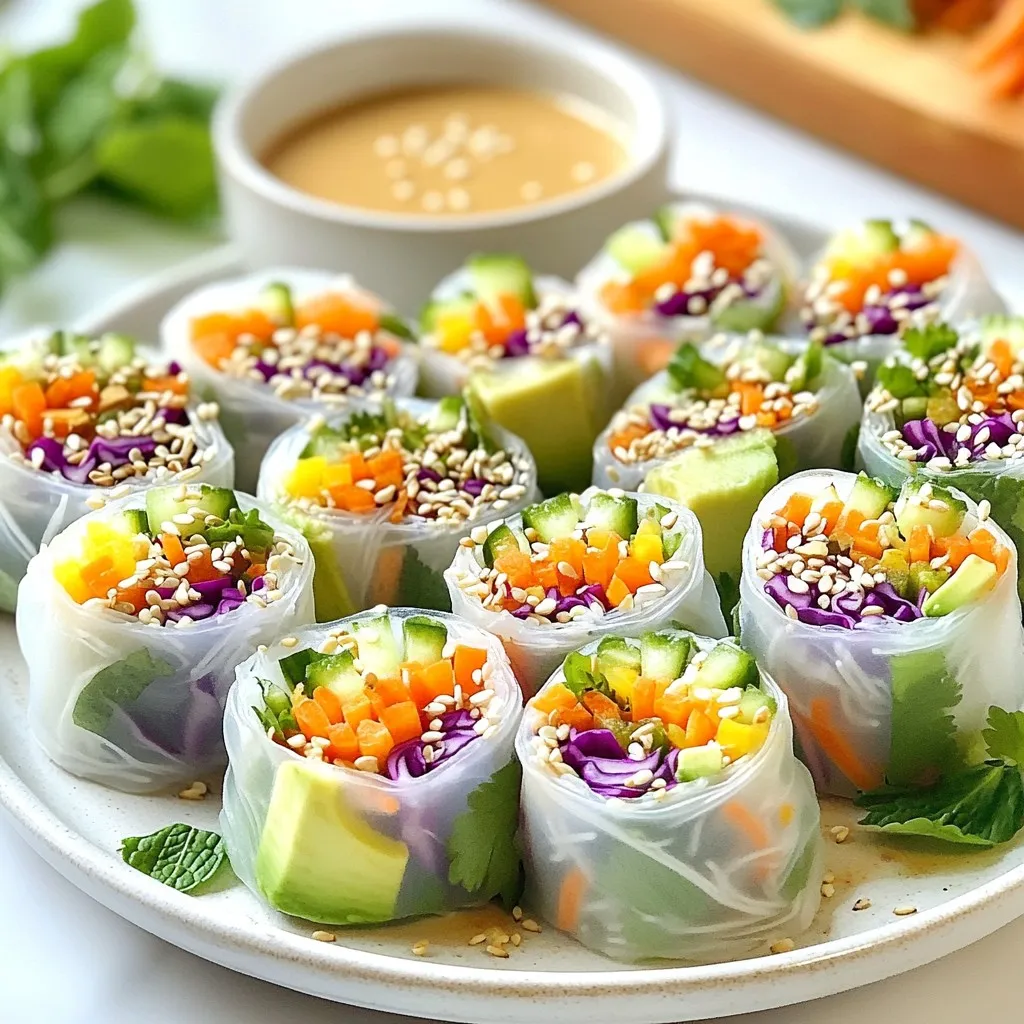
Rainbow Veggie Spring Rolls Refreshing and Colorful Dish

WANT TO SAVE THIS RECIPE?

Looking for a fresh and colorful dish that’s as tasty as it is fun to make? Rainbow Veggie Spring Rolls are the perfect choice! Packed with vibrant veggies, fresh herbs, and a delicious dipping sauce, these rolls are a feast for the eyes and the palate. In this guide, I’ll show you how to create this bright, healthy snack step-by-step, so you can impress your family and friends at your next gathering. Let’s get rolling!

- 8 rice paper wrappers - 1 cup red cabbage, thinly shredded - 1 cup carrots, julienned - 1 cup cucumbers, julienned - 1 cup bell peppers (assorted colors), thinly sliced - 1 ripe avocado, sliced - 1 cup fresh mint leaves, gently rinsed - 1 cup fresh cilantro leaves, gently rinsed - 1/4 cup sesame seeds, toasted - 1/4 cup creamy peanut butter - 2 tablespoons low-sodium soy sauce - 2 tablespoons freshly squeezed lime juice - 1 teaspoon honey or agave syrup I love using fresh ingredients for my rainbow veggie spring rolls. Each color brings its own flavor and health benefits. You’ll need rice paper wrappers as your base. These wrappers are light and easy to use. They hold everything together and add a nice texture. For the veggies, I like to use red cabbage, carrots, cucumbers, bell peppers, and avocado. Each veggie adds crunch and color. Red cabbage is great for its crunch, and it looks beautiful. Carrots add sweetness, while cucumbers bring a refreshing taste. Bell peppers give a nice pop of color and flavor. Don't forget the creamy avocado for richness! Fresh herbs are key too. I use mint and cilantro for their bright flavors. They add freshness and make the rolls taste even better. Lastly, I sprinkle toasted sesame seeds on top for a nutty crunch. They also add a lovely visual touch. For the dipping sauce, I mix creamy peanut butter, low-sodium soy sauce, fresh lime juice, and honey or agave syrup. This sauce balances the fresh flavors of the spring rolls. It adds a bit of sweetness and tang, which is simply delicious. When you gather these ingredients, you set yourself up for a fun cooking experience. Enjoy the process of making these colorful rolls! {{ingredient_image_2}} Start by washing all your vegetables. This keeps them clean and safe to eat. Use a sharp knife to cut the vegetables into thin, even pieces. For carrots and cucumbers, julienne them into thin strips. Julienning makes them easy to roll and look nice. Shred the red cabbage into fine pieces for a crunchy texture. Thin slices of bell peppers add color and flavor. Next, soak the rice paper wrappers. Fill a shallow dish with warm water. It should be deep enough for the wrappers to fully submerge. Take one rice paper wrapper and dip it in the water for about 10-15 seconds. You want it soft but not too mushy. Remove it carefully and let it rest on a clean surface. Now it’s time to assemble your spring rolls. Place the soaked wrapper flat on a damp kitchen towel. This helps prevent sticking. In the center, layer your vegetable fillings. Start with the red cabbage, then add carrots, cucumbers, and bell peppers. Don’t forget avocado slices for creaminess. Add fresh mint and cilantro on top for a burst of flavor. Sprinkle toasted sesame seeds for crunch. To roll the spring roll, gently fold in the sides of the wrapper. Start rolling from the bottom, tucking in the fillings. Keep it tight as you roll up to the top. Make sure it seals well. Repeat this with the rest of the wrappers and fillings. Each roll should be colorful and packed with flavor! To make great spring rolls, the rolling technique is key. Start by soaking rice paper in warm water. This makes it soft and easy to work with. If the rice paper sticks, try placing it on a damp kitchen towel. It helps keep things from sticking. When you layer your fillings, keep them in the center. Start with red cabbage, then add carrots, cucumbers, bell peppers, and avocado. This ensures even distribution of flavors. Don't overstuff the wrapper. A small handful of each vegetable works best. For a beautiful display, arrange your spring rolls in a circle on a colorful platter. Place the dipping sauce in a small bowl at the center. This draws the eye and makes your dish pop. Garnish with fresh mint leaves around the platter. This adds color and a fresh scent. You can also sprinkle some toasted sesame seeds on top for added crunch. You can adjust the dipping sauce to match your taste. If you like it sweeter, add more honey or agave syrup. For a zestier flavor, squeeze in extra lime juice. If you're feeling adventurous, try different dipping sauces. Options like hoisin sauce or spicy sriracha can add a fun twist to your spring rolls. Pro Tips Fresh Ingredients: Always use the freshest vegetables and herbs to enhance the flavor and texture of your spring rolls. Perfect Soaking: Soak the rice paper just until it's pliable; over-soaking can make it too fragile to roll. Rolling Technique: Tuck the filling tightly as you roll to create a compact spring roll that holds its shape. Custom Dipping Sauce: Feel free to experiment with the dipping sauce by adding spices or different nut butters for a unique twist. {{image_4}} You can change the veggies in your spring rolls based on what you like. Use seasonal vegetables for the best taste. For example, try zucchini in summer or butternut squash in fall. Adding proteins can make your rolls heartier. You can include tofu for a vegetarian option or shrimp for seafood lovers. Both options give a nice twist to the classic recipe. Herbs and spices can change the taste of your spring rolls. Consider adding basil or cilantro for a fresh kick. A hint of ginger can also brighten the flavors. You can even incorporate sauces into the filling. Adding a bit of hoisin sauce or sriracha brings a fun zing to your rolls. It’s all about what flavors you enjoy the most! If you need gluten-free options, look for rice paper wrappers labeled as gluten-free. They work just as well for the rolls. For vegan sauces, use plant-based ingredients instead of dairy. For instance, swap creamy peanut butter with a nut-free alternative. This way, everyone can enjoy these tasty rolls! To keep leftover spring rolls fresh, store them in the fridge. I recommend using an airtight container. This method helps prevent them from drying out. You should also place a damp paper towel inside the container. This will help keep the rolls moist. The rolls can last up to three days when stored properly. If you want to enjoy them later, avoid stacking them directly on top of each other. Use parchment paper between layers to prevent sticking. It ensures they stay nice and intact until you're ready to eat. For the dipping sauce, store it in a clean jar or container with a tight lid. This will keep the flavors fresh. If you make extra sauce, it can last in the fridge for about a week. Be sure to check for any changes in smell or texture before using. If you want to use the sauce later, consider freezing it in ice cube trays. Once frozen, transfer the cubes to a freezer bag. This way, you can easily grab a portion whenever you need it! Just thaw it in the fridge before serving. To keep spring rolls from sticking, try these simple tips: - Use damp cloths: Place a damp kitchen towel between layers of spring rolls. - Store with space: Avoid stacking rolls directly on top of each other. - Use cornstarch: Lightly dust the rolls with cornstarch before storing. - Wrap tightly: Ensure each roll is sealed well to reduce moisture. These steps will help you enjoy fresh, non-sticky spring rolls later. Yes, you can make spring rolls ahead of time! Here’s how: - Prep the veggies: Cut and store your veggies in airtight containers. - Soak wrappers: Soak your rice paper just before wrapping. This keeps them fresh. - Wrap and store: Wrap the rolls and place them in the fridge. Use damp cloths to prevent sticking. - Eat within a day: For best taste, eat them within 24 hours. This way, you can enjoy them for lunch or a quick snack. For a stunning presentation, follow these ideas: - Colorful platter: Arrange the rolls on a vibrant serving platter. - Dipping sauce: Serve with the dipping sauce in a small bowl in the center. - Garnish: Add extra mint leaves around the platter for freshness. - Cut and display: Cut rolls in half to show off the colorful filling. These tips make your spring rolls a hit at any gathering! You can make fresh, vibrant spring rolls with simple steps and tasty ingredients. We covered everything from choosing the right veggies to crafting a scrumptious dipping sauce. Remember, the key to perfect rolls is in how you prepare and assemble. Don’t hesitate to try new flavors and combinations! These rolls are versatile and great for sharing. Store any leftovers properly to keep them fresh. Enjoy crafting your unique spring rolls, and impress your family with your culinary skills.

Why I Love This Recipe

  1. Vibrant Colors: This recipe is a feast for the eyes, showcasing a rainbow of fresh vegetables that make each spring roll visually appealing.
  2. Healthy and Fresh: Packed with crunchy veggies and fresh herbs, these spring rolls are a light and nutritious option for any meal.
  3. Easy to Customize: You can easily swap out ingredients based on your preferences or seasonal availability, making this recipe versatile.
  4. Delicious Dipping Sauce: The creamy peanut butter dipping sauce adds a rich and savory flavor that perfectly complements the fresh ingredients.

Ingredients

Main Ingredients

– 8 rice paper wrappers

– 1 cup red cabbage, thinly shredded

– 1 cup carrots, julienned

– 1 cup cucumbers, julienned

– 1 cup bell peppers (assorted colors), thinly sliced

– 1 ripe avocado, sliced

– 1 cup fresh mint leaves, gently rinsed

– 1 cup fresh cilantro leaves, gently rinsed

– 1/4 cup sesame seeds, toasted

Dipping Sauce Ingredients

– 1/4 cup creamy peanut butter

– 2 tablespoons low-sodium soy sauce

– 2 tablespoons freshly squeezed lime juice

– 1 teaspoon honey or agave syrup

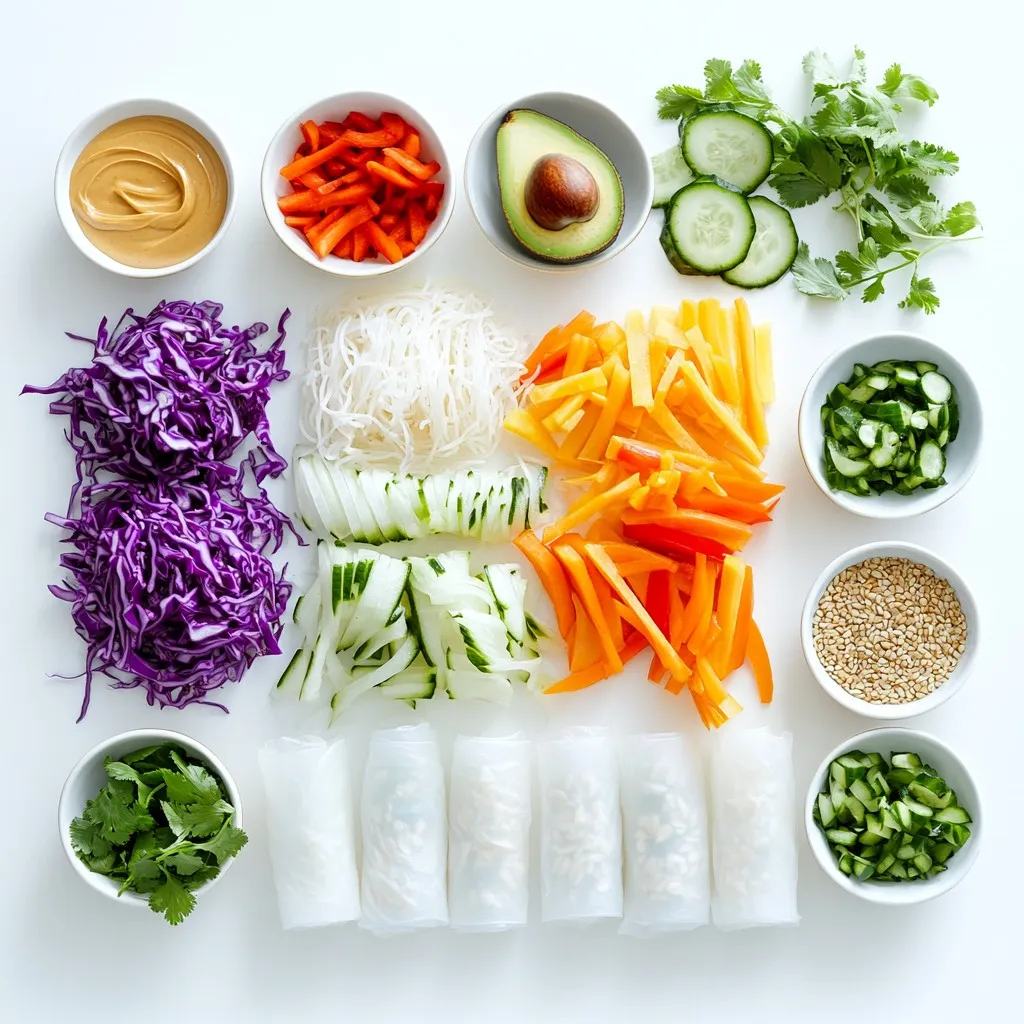
I love using fresh ingredients for my rainbow veggie spring rolls. Each color brings its own flavor and health benefits. You’ll need rice paper wrappers as your base. These wrappers are light and easy to use. They hold everything together and add a nice texture.

For the veggies, I like to use red cabbage, carrots, cucumbers, bell peppers, and avocado. Each veggie adds crunch and color. Red cabbage is great for its crunch, and it looks beautiful. Carrots add sweetness, while cucumbers bring a refreshing taste. Bell peppers give a nice pop of color and flavor. Don’t forget the creamy avocado for richness!

Fresh herbs are key too. I use mint and cilantro for their bright flavors. They add freshness and make the rolls taste even better. Lastly, I sprinkle toasted sesame seeds on top for a nutty crunch. They also add a lovely visual touch.

For the dipping sauce, I mix creamy peanut butter, low-sodium soy sauce, fresh lime juice, and honey or agave syrup. This sauce balances the fresh flavors of the spring rolls. It adds a bit of sweetness and tang, which is simply delicious.

When you gather these ingredients, you set yourself up for a fun cooking experience. Enjoy the process of making these colorful rolls!
Step-by-Step Instructions

Preparing the Vegetables

Start by washing all your vegetables. This keeps them clean and safe to eat. Use a sharp knife to cut the vegetables into thin, even pieces. For carrots and cucumbers, julienne them into thin strips. Julienning makes them easy to roll and look nice. Shred the red cabbage into fine pieces for a crunchy texture. Thin slices of bell peppers add color and flavor.

Soaking and Preparing Rice Paper

Next, soak the rice paper wrappers. Fill a shallow dish with warm water. It should be deep enough for the wrappers to fully submerge. Take one rice paper wrapper and dip it in the water for about 10-15 seconds. You want it soft but not too mushy. Remove it carefully and let it rest on a clean surface.

Assembling and Rolling the Spring Rolls

Now it’s time to assemble your spring rolls. Place the soaked wrapper flat on a damp kitchen towel. This helps prevent sticking. In the center, layer your vegetable fillings. Start with the red cabbage, then add carrots, cucumbers, and bell peppers. Don’t forget avocado slices for creaminess. Add fresh mint and cilantro on top for a burst of flavor. Sprinkle toasted sesame seeds for crunch.

To roll the spring roll, gently fold in the sides of the wrapper. Start rolling from the bottom, tucking in the fillings. Keep it tight as you roll up to the top. Make sure it seals well. Repeat this with the rest of the wrappers and fillings. Each roll should be colorful and packed with flavor!

Tips & Tricks

Perfecting the Rolling Technique

To make great spring rolls, the rolling technique is key. Start by soaking rice paper in warm water. This makes it soft and easy to work with. If the rice paper sticks, try placing it on a damp kitchen towel. It helps keep things from sticking.

When you layer your fillings, keep them in the center. Start with red cabbage, then add carrots, cucumbers, bell peppers, and avocado. This ensures even distribution of flavors. Don’t overstuff the wrapper. A small handful of each vegetable works best.

Presentation and Serving Suggestions

For a beautiful display, arrange your spring rolls in a circle on a colorful platter. Place the dipping sauce in a small bowl at the center. This draws the eye and makes your dish pop.

Garnish with fresh mint leaves around the platter. This adds color and a fresh scent. You can also sprinkle some toasted sesame seeds on top for added crunch.

Dipping Sauce Enhancements

You can adjust the dipping sauce to match your taste. If you like it sweeter, add more honey or agave syrup. For a zestier flavor, squeeze in extra lime juice.

If you’re feeling adventurous, try different dipping sauces. Options like hoisin sauce or spicy sriracha can add a fun twist to your spring rolls.

Pro Tips

  1. Fresh Ingredients: Always use the freshest vegetables and herbs to enhance the flavor and texture of your spring rolls.
  2. Perfect Soaking: Soak the rice paper just until it’s pliable; over-soaking can make it too fragile to roll.
  3. Rolling Technique: Tuck the filling tightly as you roll to create a compact spring roll that holds its shape.
  4. Custom Dipping Sauce: Feel free to experiment with the dipping sauce by adding spices or different nut butters for a unique twist.

Variations

Different Vegetable Combinations

You can change the veggies in your spring rolls based on what you like. Use seasonal vegetables for the best taste. For example, try zucchini in summer or butternut squash in fall. Adding proteins can make your rolls heartier. You can include tofu for a vegetarian option or shrimp for seafood lovers. Both options give a nice twist to the classic recipe.

Flavor Enhancements

Herbs and spices can change the taste of your spring rolls. Consider adding basil or cilantro for a fresh kick. A hint of ginger can also brighten the flavors. You can even incorporate sauces into the filling. Adding a bit of hoisin sauce or sriracha brings a fun zing to your rolls. It’s all about what flavors you enjoy the most!

Gluten-Free or Vegan Options

If you need gluten-free options, look for rice paper wrappers labeled as gluten-free. They work just as well for the rolls. For vegan sauces, use plant-based ingredients instead of dairy. For instance, swap creamy peanut butter with a nut-free alternative. This way, everyone can enjoy these tasty rolls!

Storage Info

Storing Leftover Spring Rolls

To keep leftover spring rolls fresh, store them in the fridge. I recommend using an airtight container. This method helps prevent them from drying out. You should also place a damp paper towel inside the container. This will help keep the rolls moist. The rolls can last up to three days when stored properly.

If you want to enjoy them later, avoid stacking them directly on top of each other. Use parchment paper between layers to prevent sticking. It ensures they stay nice and intact until you’re ready to eat.

Dipping Sauce Storage

For the dipping sauce, store it in a clean jar or container with a tight lid. This will keep the flavors fresh. If you make extra sauce, it can last in the fridge for about a week. Be sure to check for any changes in smell or texture before using.

If you want to use the sauce later, consider freezing it in ice cube trays. Once frozen, transfer the cubes to a freezer bag. This way, you can easily grab a portion whenever you need it! Just thaw it in the fridge before serving.

FAQs

How do you keep spring rolls from sticking together?

To keep spring rolls from sticking, try these simple tips:

Use damp cloths: Place a damp kitchen towel between layers of spring rolls.

Store with space: Avoid stacking rolls directly on top of each other.

Use cornstarch: Lightly dust the rolls with cornstarch before storing.

Wrap tightly: Ensure each roll is sealed well to reduce moisture.

These steps will help you enjoy fresh, non-sticky spring rolls later.

Can you make spring rolls ahead of time?

Yes, you can make spring rolls ahead of time! Here’s how:

Prep the veggies: Cut and store your veggies in airtight containers.

Soak wrappers: Soak your rice paper just before wrapping. This keeps them fresh.

Wrap and store: Wrap the rolls and place them in the fridge. Use damp cloths to prevent sticking.

Eat within a day: For best taste, eat them within 24 hours.

This way, you can enjoy them for lunch or a quick snack.

What is the best way to serve rainbow veggie spring rolls?

For a stunning presentation, follow these ideas:

Colorful platter: Arrange the rolls on a vibrant serving platter.

Dipping sauce: Serve with the dipping sauce in a small bowl in the center.

Garnish: Add extra mint leaves around the platter for freshness.

Cut and display: Cut rolls in half to show off the colorful filling.

These tips make your spring rolls a hit at any gathering!

You can make fresh, vibrant spring rolls with simple steps and tasty ingredients. We covered everything from choosing the right veggies to crafting a scrumptious dipping sauce. Remember, the key to perfect rolls is in how you prepare and assemble.

Don’t hesitate to try new flavors and combinations! These rolls are versatile and great for sharing. Store any leftovers properly to keep them fresh. Enjoy crafting your unique spring rolls, and impress your family with your culinary skill

- 8 rice paper wrappers - 1 cup red cabbage, thinly shredded - 1 cup carrots, julienned - 1 cup cucumbers, julienned - 1 cup bell peppers (assorted colors), thinly sliced - 1 ripe avocado, sliced - 1 cup fresh mint leaves, gently rinsed - 1 cup fresh cilantro leaves, gently rinsed - 1/4 cup sesame seeds, toasted - 1/4 cup creamy peanut butter - 2 tablespoons low-sodium soy sauce - 2 tablespoons freshly squeezed lime juice - 1 teaspoon honey or agave syrup I love using fresh ingredients for my rainbow veggie spring rolls. Each color brings its own flavor and health benefits. You’ll need rice paper wrappers as your base. These wrappers are light and easy to use. They hold everything together and add a nice texture. For the veggies, I like to use red cabbage, carrots, cucumbers, bell peppers, and avocado. Each veggie adds crunch and color. Red cabbage is great for its crunch, and it looks beautiful. Carrots add sweetness, while cucumbers bring a refreshing taste. Bell peppers give a nice pop of color and flavor. Don't forget the creamy avocado for richness! Fresh herbs are key too. I use mint and cilantro for their bright flavors. They add freshness and make the rolls taste even better. Lastly, I sprinkle toasted sesame seeds on top for a nutty crunch. They also add a lovely visual touch. For the dipping sauce, I mix creamy peanut butter, low-sodium soy sauce, fresh lime juice, and honey or agave syrup. This sauce balances the fresh flavors of the spring rolls. It adds a bit of sweetness and tang, which is simply delicious. When you gather these ingredients, you set yourself up for a fun cooking experience. Enjoy the process of making these colorful rolls! {{ingredient_image_2}} Start by washing all your vegetables. This keeps them clean and safe to eat. Use a sharp knife to cut the vegetables into thin, even pieces. For carrots and cucumbers, julienne them into thin strips. Julienning makes them easy to roll and look nice. Shred the red cabbage into fine pieces for a crunchy texture. Thin slices of bell peppers add color and flavor. Next, soak the rice paper wrappers. Fill a shallow dish with warm water. It should be deep enough for the wrappers to fully submerge. Take one rice paper wrapper and dip it in the water for about 10-15 seconds. You want it soft but not too mushy. Remove it carefully and let it rest on a clean surface. Now it’s time to assemble your spring rolls. Place the soaked wrapper flat on a damp kitchen towel. This helps prevent sticking. In the center, layer your vegetable fillings. Start with the red cabbage, then add carrots, cucumbers, and bell peppers. Don’t forget avocado slices for creaminess. Add fresh mint and cilantro on top for a burst of flavor. Sprinkle toasted sesame seeds for crunch. To roll the spring roll, gently fold in the sides of the wrapper. Start rolling from the bottom, tucking in the fillings. Keep it tight as you roll up to the top. Make sure it seals well. Repeat this with the rest of the wrappers and fillings. Each roll should be colorful and packed with flavor! To make great spring rolls, the rolling technique is key. Start by soaking rice paper in warm water. This makes it soft and easy to work with. If the rice paper sticks, try placing it on a damp kitchen towel. It helps keep things from sticking. When you layer your fillings, keep them in the center. Start with red cabbage, then add carrots, cucumbers, bell peppers, and avocado. This ensures even distribution of flavors. Don't overstuff the wrapper. A small handful of each vegetable works best. For a beautiful display, arrange your spring rolls in a circle on a colorful platter. Place the dipping sauce in a small bowl at the center. This draws the eye and makes your dish pop. Garnish with fresh mint leaves around the platter. This adds color and a fresh scent. You can also sprinkle some toasted sesame seeds on top for added crunch. You can adjust the dipping sauce to match your taste. If you like it sweeter, add more honey or agave syrup. For a zestier flavor, squeeze in extra lime juice. If you're feeling adventurous, try different dipping sauces. Options like hoisin sauce or spicy sriracha can add a fun twist to your spring rolls. Pro Tips Fresh Ingredients: Always use the freshest vegetables and herbs to enhance the flavor and texture of your spring rolls. Perfect Soaking: Soak the rice paper just until it's pliable; over-soaking can make it too fragile to roll. Rolling Technique: Tuck the filling tightly as you roll to create a compact spring roll that holds its shape. Custom Dipping Sauce: Feel free to experiment with the dipping sauce by adding spices or different nut butters for a unique twist. {{image_4}} You can change the veggies in your spring rolls based on what you like. Use seasonal vegetables for the best taste. For example, try zucchini in summer or butternut squash in fall. Adding proteins can make your rolls heartier. You can include tofu for a vegetarian option or shrimp for seafood lovers. Both options give a nice twist to the classic recipe. Herbs and spices can change the taste of your spring rolls. Consider adding basil or cilantro for a fresh kick. A hint of ginger can also brighten the flavors. You can even incorporate sauces into the filling. Adding a bit of hoisin sauce or sriracha brings a fun zing to your rolls. It’s all about what flavors you enjoy the most! If you need gluten-free options, look for rice paper wrappers labeled as gluten-free. They work just as well for the rolls. For vegan sauces, use plant-based ingredients instead of dairy. For instance, swap creamy peanut butter with a nut-free alternative. This way, everyone can enjoy these tasty rolls! To keep leftover spring rolls fresh, store them in the fridge. I recommend using an airtight container. This method helps prevent them from drying out. You should also place a damp paper towel inside the container. This will help keep the rolls moist. The rolls can last up to three days when stored properly. If you want to enjoy them later, avoid stacking them directly on top of each other. Use parchment paper between layers to prevent sticking. It ensures they stay nice and intact until you're ready to eat. For the dipping sauce, store it in a clean jar or container with a tight lid. This will keep the flavors fresh. If you make extra sauce, it can last in the fridge for about a week. Be sure to check for any changes in smell or texture before using. If you want to use the sauce later, consider freezing it in ice cube trays. Once frozen, transfer the cubes to a freezer bag. This way, you can easily grab a portion whenever you need it! Just thaw it in the fridge before serving. To keep spring rolls from sticking, try these simple tips: - Use damp cloths: Place a damp kitchen towel between layers of spring rolls. - Store with space: Avoid stacking rolls directly on top of each other. - Use cornstarch: Lightly dust the rolls with cornstarch before storing. - Wrap tightly: Ensure each roll is sealed well to reduce moisture. These steps will help you enjoy fresh, non-sticky spring rolls later. Yes, you can make spring rolls ahead of time! Here’s how: - Prep the veggies: Cut and store your veggies in airtight containers. - Soak wrappers: Soak your rice paper just before wrapping. This keeps them fresh. - Wrap and store: Wrap the rolls and place them in the fridge. Use damp cloths to prevent sticking. - Eat within a day: For best taste, eat them within 24 hours. This way, you can enjoy them for lunch or a quick snack. For a stunning presentation, follow these ideas: - Colorful platter: Arrange the rolls on a vibrant serving platter. - Dipping sauce: Serve with the dipping sauce in a small bowl in the center. - Garnish: Add extra mint leaves around the platter for freshness. - Cut and display: Cut rolls in half to show off the colorful filling. These tips make your spring rolls a hit at any gathering! You can make fresh, vibrant spring rolls with simple steps and tasty ingredients. We covered everything from choosing the right veggies to crafting a scrumptious dipping sauce. Remember, the key to perfect rolls is in how you prepare and assemble. Don’t hesitate to try new flavors and combinations! These rolls are versatile and great for sharing. Store any leftovers properly to keep them fresh. Enjoy crafting your unique spring rolls, and impress your family with your culinary skills.

Radiant Rainbow Veggie Spring Rolls

A colorful and healthy dish featuring fresh vegetables wrapped in rice paper, served with a creamy peanut dipping sauce.
Prep Time 20 minutes
Cook Time 10 minutes
Total Time 30 minutes
Course Appetizer
Cuisine Asian
Servings 4
Calories 150 kcal

Ingredients
  

  • 8 pieces rice paper wrappers
  • 1 cup red cabbage, thinly shredded
  • 1 cup carrots, julienned
  • 1 cup cucumbers, julienned
  • 1 cup bell peppers (assorted colors), thinly sliced
  • 1 piece ripe avocado, sliced
  • 1 cup fresh mint leaves, gently rinsed
  • 1 cup fresh cilantro leaves, gently rinsed
  • 0.25 cup sesame seeds, toasted
  • 0.25 cup creamy peanut butter (for dipping sauce)
  • 2 tablespoons low-sodium soy sauce
  • 2 tablespoons freshly squeezed lime juice
  • 1 teaspoon honey or agave syrup (to taste)
  • cup warm water (for soaking rice paper)

Instructions
 

  • Begin by washing all your vegetables. Cut them into thin, uniform pieces to ensure even texture and easy rolling.
  • In a shallow dish or bowl, pour warm water deep enough to submerge the rice paper wrappers.
  • Take one rice paper wrapper and immerse it in the water for about 10-15 seconds, until it becomes soft and pliable.
  • Lay the soaked wrapper flat on a clean surface or a damp kitchen towel to prevent sticking.
  • In the center of the wrapper, place a small handful of each vegetable, starting with red cabbage, followed by the julienned carrots, cucumbers, sliced bell peppers, and a few slices of avocado.
  • On top of the veggies, add a few lightly crushed mint and cilantro leaves, then sprinkle some toasted sesame seeds for added crunch.
  • Gently fold in the sides of the wrapper to enclose the filling. Carefully roll it from the bottom upwards, tucking in the ingredients as you go, ensuring a tight closure.
  • Continue with the remaining rice paper wrappers and filling ingredients until all ingredients are used.
  • In a small bowl, combine the creamy peanut butter, low-sodium soy sauce, freshly squeezed lime juice, and honey or agave syrup. Mix well until you achieve a smooth consistency. Adjust sweetness to your liking.
  • Arrange the vibrant spring rolls on a serving platter alongside the dipping sauce for a delightful presentation.

Notes

Present the spring rolls on a colorful platter, garnished with extra mint leaves for freshness.
Keyword appetizer, healthy, spring rolls, vegan

WANT TO SAVE THIS RECIPE?