
Are you ready to roll up some fun in the kitchen? My Rainbow Veggie Sushi Rolls are not only easy to make but also a colorful treat that everyone will love. With simple ingredients like fresh veggies and sushi rice, you can create a dish that's both tasty and healthy. Join me as I guide you through the steps to make these vibrant sushi rolls that are sure to impress!
Why I Love This Recipe
- Colorful Presentation: These sushi rolls are a feast for the eyes, showcasing a vibrant array of fresh vegetables that make every bite visually appealing.
- Healthy Ingredients: Packed with nutritious veggies like cucumber, avocado, and purple cabbage, these rolls are a healthy choice for any meal.
- Customizable: This recipe allows you to mix and match your favorite vegetables, making it easy to cater to different tastes and dietary preferences.
- Fun to Make: Rolling sushi can be a fun and interactive experience, perfect for gatherings or a family cooking night.
Ingredients
List of Ingredients
- 2 cups sushi rice
- 2 ½ cups water
- 4 tablespoons rice vinegar
- 1 tablespoon sugar
- ½ teaspoon salt
- 4 nori sheets (seaweed)
- 1 small cucumber, julienned
- 1 medium carrot, julienned
- 1 small red bell pepper, thinly sliced
- 1 avocado, sliced
- ½ cup purple cabbage, shredded
- Sesame seeds, for garnish
- Soy sauce, for dipping
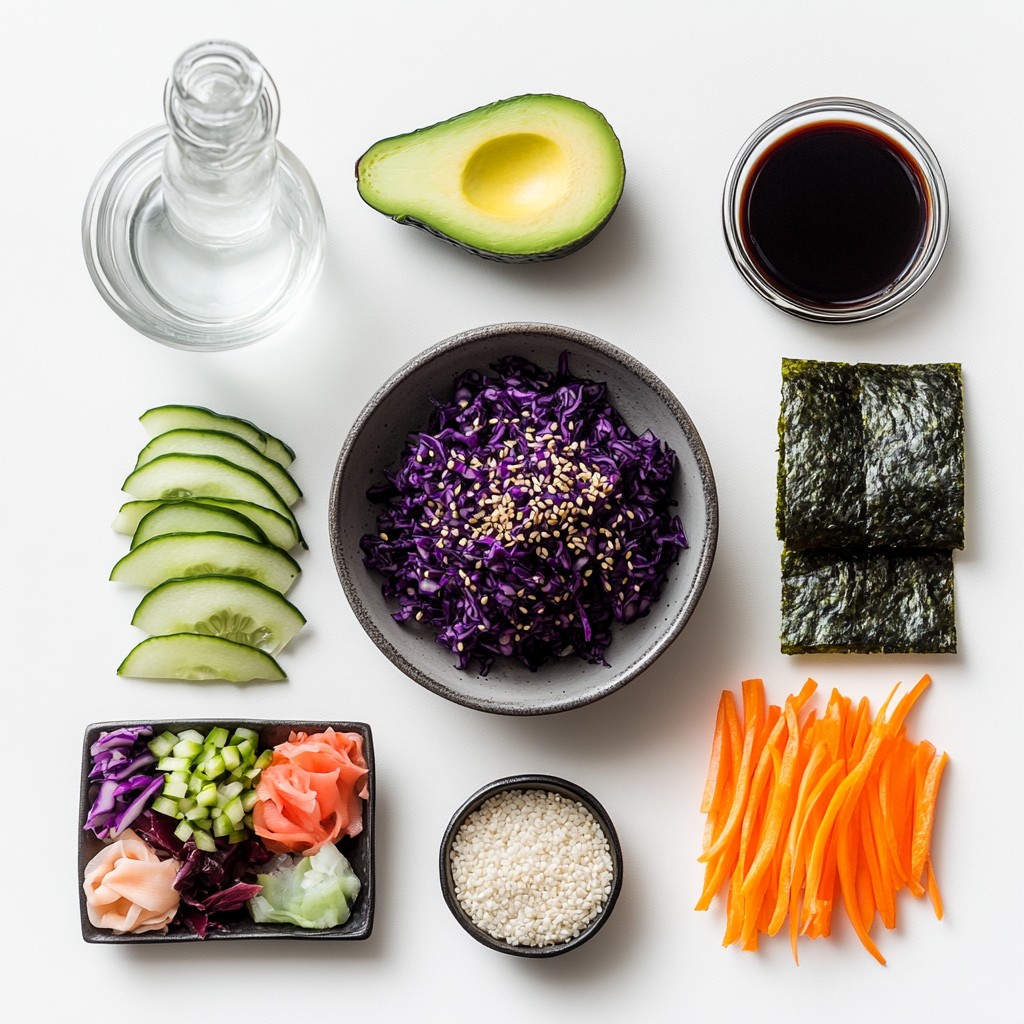
To make rainbow veggie sushi rolls, you need fresh and colorful ingredients. Start with sushi rice and water to create the base. The seasoning for the rice includes rice vinegar, sugar, and salt. This blend gives the rice a tasty touch.
Next, gather your vegetable fillings. Cucumber, carrot, red bell pepper, avocado, and purple cabbage add vibrant colors and crunch. Each ingredient brings unique flavors and textures to your rolls.
Don't forget your garnishes! A sprinkle of sesame seeds adds a nice crunch. Soy sauce serves as a simple and classic dipping option.
Having all these ingredients ready makes the sushi-making process smooth and fun. Enjoy the burst of colors while you prepare!
Step-by-Step Instructions
Cooking the Sushi Rice
1. Start by rinsing the sushi rice. Use a fine mesh strainer. Rinse until the water runs clear. This step helps remove excess starch. It also makes the rice sticky and perfect for sushi.
2. Next, cook the rice. In a medium pot, add the rinsed rice and 2 ½ cups of water. Bring it to a boil over medium heat. Once boiling, turn the heat down low. Cover the pot and let it simmer for 20 minutes. The rice should be tender and absorb all the water.
3. While the rice cooks, prepare the sushi vinegar. In a small bowl, mix together rice vinegar, sugar, and salt. Whisk until both sugar and salt dissolve. When the rice is done, fluff it gently with a fork. Slowly mix in the vinegar mixture. Let the rice cool to room temperature.
Assembling the Sushi Rolls
1. Grab your bamboo sushi mat and place it on a clean surface. Lay a nori sheet on the mat, with the shiny side facing down. Align it with the edge closest to you.
2. Wet your hands to keep the rice from sticking. Take a handful of cooled sushi rice. Spread it evenly over the nori, leaving about 1 inch at the top. This space helps seal the roll later.
3. Now it's time to layer the veggies. In the center of the rice, add a line of julienned cucumber, carrot, thinly sliced red bell pepper, avocado slices, and shredded purple cabbage. Make it colorful!
Rolling and Cutting the Sushi
1. Start rolling the sushi from the edge closest to you. Use the bamboo mat to guide the roll. Apply gentle pressure to make it tight. Keep rolling until you reach the top edge of the nori.
2. To seal the roll, wet the top edge of the nori with a little water. This step helps it stick together.
3. Repeat with the rest of your ingredients to make more rolls.
4. Finally, slice each roll into 6-8 pieces. Use a sharp knife for clean cuts. Wipe the knife with a damp cloth between slices for best results.
5. Sprinkle sesame seeds on top of the sushi pieces for crunch and style. Serve with soy sauce for dipping.
Tips & Tricks
Best Practices for Rolling Sushi
To make sushi rolling easier, you need to wet your hands. This prevents the rice from sticking to your fingers. Just dip your hands in water before handling the rice. It works wonders!
When rolling, apply even pressure. You want to create a tight roll without squishing the fillings. Start from the edge closest to you and roll away gently. The bamboo mat helps guide your roll.
Presentation Ideas
Arranging the sushi rolls on a platter can make a big impact. Use a large plate or board. Place the rolls in a line or a circle for visual appeal.
To add color, consider garnishing with sesame seeds or pickled ginger. You can also use a decorative leaf of lettuce. These simple touches make the sushi even more inviting.
Common Mistakes to Avoid
One common mistake is overfilling the rolls. Too many ingredients can make it hard to roll. Stick to a few colorful veggies for the best results.
Another mistake is not letting the rice cool enough. Hot rice can cause the nori to become soggy. Allow the rice to cool to room temperature before using it in your rolls. This ensures a better texture and taste.
Pro Tips
- Rinse the Rice: Thoroughly rinsing the sushi rice until the water runs clear is essential for achieving the perfect texture and preventing the rice from becoming gummy.
- Cool the Rice: Allow the seasoned rice to cool to room temperature before rolling. This step helps the rice hold its shape without becoming too sticky.
- Use a Sharp Knife: When slicing the rolls, use a sharp knife and wet it between cuts for clean, precise slices that showcase the beautiful filling.
- Experiment with Fillings: Feel free to get creative with the fillings! Try different vegetables, proteins, or even fruits to customize your sushi rolls.
Variations
Alternative Fillings
You can change the filling to suit your taste. Try using these veggies:
- Avocado
- Zucchini
- Radishes
- Spinach
- Asparagus
You can also add proteins like tofu or shrimp. For a fun twist, make seasonal themes. In spring, use fresh peas and herbs. In fall, add roasted sweet potato or pumpkin. These options keep your sushi exciting and fresh.
Sushi Roll Styles
There are many ways to roll sushi. You can try hand rolls, which are cone-shaped. These are easy to eat and fun to make. Uramaki is another style, where rice is on the outside. This style adds a nice touch and looks great.
If you need to adapt for diets, it’s simple! Use rice paper instead of nori for gluten-free rolls. You can also fill your rolls with only veggies for a vegan option. This way, everyone can enjoy your colorful sushi.
Storage Information
Best Practices for Freshness
To store leftover sushi rolls, wrap them tightly in plastic wrap. This keeps them fresh and prevents them from drying out. If you have a sushi container, that works well too. Place the wrapped rolls in the fridge right away.
Sushi can be kept in the fridge for up to 24 hours. After this time, the rice may dry out or lose its texture. It’s best to eat sushi rolls the same day you make them for the best taste.
Reheating Guidelines
Sushi is best enjoyed cold, but if you prefer warm sushi, there are ways to heat it. You can use a microwave, but do it carefully. Heat on low power for only a few seconds. This helps avoid overcooking the rice.
When consuming leftovers, always check for freshness first. If the sushi smells off or looks unusual, it’s safer to throw it away. Always prioritize your health and safety when enjoying food.
FAQs
What is sushi rice and how is it different from regular rice?
Sushi rice is short-grain rice. It has a sticky texture when cooked. This stickiness helps hold the sushi rolls together. Regular rice, like long-grain rice, does not have the same texture. It tends to be drier and less sticky. For sushi, we need the right kind of rice. This ensures that our rolls stay firm and don't fall apart.
Can I use other types of seaweed?
Yes, you can! While nori is the most common seaweed used, other types exist. You can try using soy paper or even lettuce leaves. These options can give your sushi a fun twist. Experimenting with different seaweed can change the flavor. It can also add a unique look to your rolls.
Is it necessary to use a bamboo mat for rolling?
Using a bamboo mat makes rolling easier and neater. However, it is not required. You can use a clean kitchen towel if you don’t have one. Just be careful to roll tightly. A mat helps keep the roll even and helps with pressure. If you roll by hand, practice makes perfect!
How can I adjust the spiciness of my sushi rolls?
You can control spiciness with your choice of fillings. If you want it mild, skip hot peppers. Instead, use sweet vegetables like bell peppers or cucumbers. For more heat, add spicy mayo or wasabi. You can also sprinkle some chili flakes on top. Taste as you go to find the right mix for you!
Making sushi at home is fun and tasty. We covered what you need: sushi rice, fillings, and garnishes. I shared clear steps for cooking rice, rolling, and slicing. We discussed helpful tips and common mistakes to avoid. I also offered creative filling ideas and storage tips to keep your sushi fresh.
Now, you can create delicious sushi rolls with confidence. Enjoy experimenting with flavors and impressing friends with your skills!