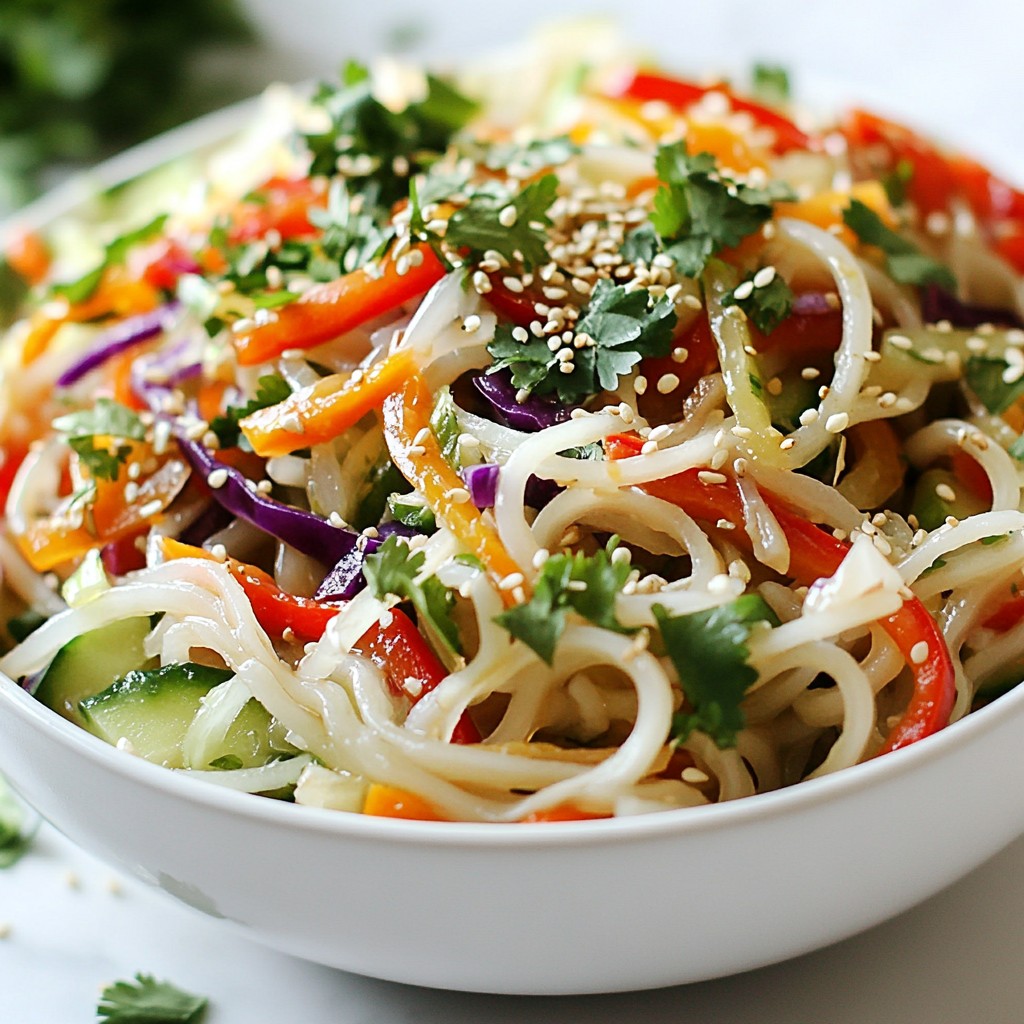
Are you ready to bring fresh flavors to your table? This Savory Sesame Ginger Noodle Salad is a vibrant mix of crunchy veggies and silky noodles, all tossed in a delightful dressing. Packed with nutrients and easy to prepare, it's perfect for lunch or dinner. Join me as I guide you through making this delicious, healthy dish that’s sure to impress your taste buds. Let’s dive into the recipe!
Why I Love This Recipe
- Fresh and Vibrant: This salad bursts with fresh vegetables, making it a colorful and nutrient-packed dish that’s perfect for any meal.
- Quick and Easy: With just 15 minutes of prep time, this recipe is ideal for busy weeknights or quick lunches.
- Customizable: You can easily swap in your favorite veggies or adjust the dressing to suit your taste, making it a versatile recipe.
- Perfect for Meal Prep: This noodle salad holds up well in the fridge, making it a great option for meal prepping for the week ahead.
Ingredients
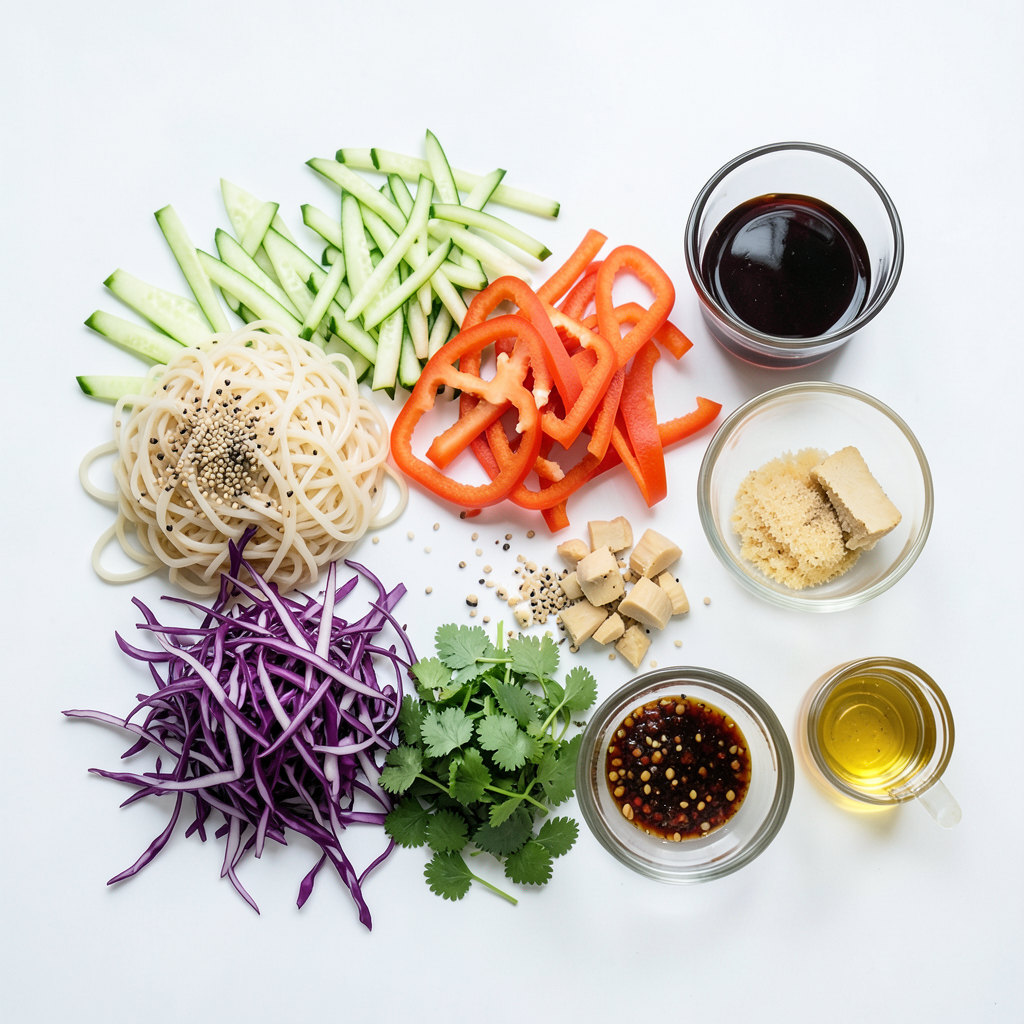
To make a tasty Sesame Ginger Noodle Salad, you'll need simple, fresh ingredients. Here’s what you should gather:
- 8 oz rice noodles
- 1 cucumber, julienned
- 1 bell pepper (red or yellow), thinly sliced
- 1 cup shredded carrots
- 1 cup shredded purple cabbage
- 1/4 cup green onions, finely chopped
- 1/4 cup sesame seeds, toasted
- 1/4 cup fresh cilantro, chopped
- 1/4 cup soy sauce (or tamari for gluten-free)
- 2 tablespoons rice vinegar
- 1 tablespoon sesame oil
- 1 tablespoon fresh ginger, grated
- 1 teaspoon honey or maple syrup
- 1 teaspoon chili paste (optional)
These ingredients blend well to create a vibrant, crunchy salad. The rice noodles serve as a soft base. The veggies add crispness and color. The dressing gives it a punchy flavor. Each ingredient plays a role in making this dish both tasty and appealing.
Rice noodles are easy to cook and soak up the dressing. Cucumber and bell pepper add a refreshing crunch. Shredded carrots and cabbage bring sweetness and a nice texture. Green onions and cilantro add fresh notes.
For the dressing, soy sauce, rice vinegar, and sesame oil create a savory mix. Fresh ginger adds warmth. Honey or maple syrup balances the saltiness. Chili paste gives an optional heat.
Gather these items to start your cooking adventure!
Step-by-Step Instructions
Cooking the Rice Noodles
Start by boiling a pot of water. You need enough water to cover the noodles. Once the water is bubbling, add 8 oz of rice noodles. Cook them for about 4 to 6 minutes. Watch them closely so they don’t get mushy. When the noodles are done, drain them in a colander. Rinse the noodles under cold water. This cools them down and stops cooking. Rinsing also helps keep them from sticking together.
Preparing the Vegetables
Grab a large mixing bowl. Add the julienned cucumber, sliced bell pepper, shredded carrots, shredded purple cabbage, and chopped green onions. Use a spatula or tongs to mix them well. Toss gently so all the veggies combine evenly. This step is key for a colorful salad.
Making the Dressing
In a separate bowl, whisk together the soy sauce, rice vinegar, sesame oil, grated ginger, honey, and chili paste. Mix them well until the dressing is smooth. This dressing brings all the flavors together. Adjust the sweet and spicy levels to your taste.
Combining Ingredients
Now, it's time to add the noodles. Place the cooled rice noodles into the bowl with the veggies. Pour the dressing over everything. Use tongs or a large spoon to toss all the ingredients together. Make sure the noodles and the veggies are fully coated in that tasty dressing.
Adding Final Touches
Sprinkle the toasted sesame seeds and chopped cilantro over the salad. Toss everything one last time. This adds a nice crunch and fresh flavor to the dish.
Resting for Flavor Development
Let the salad sit at room temperature for about 10 to 15 minutes. This resting time helps all the flavors blend together. Each bite will be more delicious after it sits. Enjoy the fresh and crunchy taste of your sesame ginger noodle salad!
Tips & Tricks
Cooking Tips for Perfect Noodles
1. Preventing overcooking: Cook the rice noodles just until tender. This usually takes 4 to 6 minutes. Watch them closely. If you overcook, they can become mushy.
2. Strategies for rinsing effectively: After cooking, drain the noodles. Rinse them under cold water. This stops the cooking process and helps prevent sticking. Make sure to toss them gently while rinsing.
Dressing Alternatives
- Variations for dietary needs: If you want a gluten-free version, use tamari instead of soy sauce. For a vegan option, swap honey for maple syrup. Both choices taste great and fit dietary needs.
Presentation Ideas
- Serving suggestions for an appealing look: Serve the salad in a large, shallow bowl. For individual servings, use small bowls. Top with extra sesame seeds and a few cilantro sprigs. This makes the dish colorful and inviting.
Pro Tips
- Cooking Noodles Perfectly: Be careful not to overcook the rice noodles; they should be al dente. Rinse them under cold water immediately after cooking to stop the cooking process and prevent sticking.
- Vegetable Variations: Feel free to add other vegetables like bell peppers, snap peas, or edamame for extra crunch and nutrition. The more colorful, the better!
- Make it Ahead: This salad can be prepared ahead of time. Just store the dressing separately and combine everything right before serving to keep the vegetables crisp.
- Adjusting Flavor: Taste the dressing before adding to the salad; adjust the sweetness or saltiness based on your preference by adding more honey, soy sauce, or vinegar.
Variations
Protein Additions
You can easily add protein to this salad. Tofu is a great choice for a veggie option. Simply cube it and sauté until golden. Chicken is another favorite. Grill or roast it, then slice thinly. For seafood lovers, shrimp works well too. Just boil or grill it until pink. These proteins make the salad hearty and filling.
Vegetable Substitutions
If you want to switch up the vegetables, you have lots of options. Instead of bell pepper, try using snap peas or shredded zucchini. They add crunch and color. If you don't have purple cabbage, green cabbage or kale can work too. Both give a nice texture and taste. Feel free to mix and match your favorite veggies to fit your taste.
Noodle Alternatives
While rice noodles are great, other noodles can shine too. Udon noodles are thick and chewy. They soak up the dressing well. Soba noodles, made from buckwheat, add a nutty flavor. If you want a lighter option, try zucchini noodles or even shirataki noodles. They keep the salad fresh while changing its flavor profile.
Storage Info
Storing Leftovers
To keep your Sesame Ginger Noodle Salad fresh, store it in an airtight container. Place the container in the fridge. This method helps keep the flavors bright. If you have extra dressing, store it separately to avoid soggy noodles.
Reheating Tips
Reheating this salad can be tricky. To maintain texture, skip the microwave. Instead, warm the noodles in a skillet over low heat. Add a splash of water to help steam them. Toss the salad gently to combine. This keeps everything crunchy.
Shelf Life
For best quality, eat the salad within three days. After that, the noodles may get mushy. Always check for freshness before eating. If it smells off or looks different, it’s best to toss it out.
FAQs
What are the best noodles to use for Sesame Ginger Noodle Salad?
The best noodles for this salad are rice noodles. They are light and soak up flavors well. You can also use soba noodles or udon noodles if you prefer. These options add a unique taste and texture. Just be sure to cook them according to the package instructions for the best results.
Can I make this salad gluten-free?
Yes, you can make this salad gluten-free. Simply use tamari instead of regular soy sauce. Tamari is a gluten-free soy sauce that tastes great. Make sure to check the noodles too. Most rice noodles are gluten-free, but always read the label to be sure.
How long can I store the salad?
You can store the salad in the fridge for up to three days. Keep it in an airtight container to maintain freshness. The veggies may lose some crunch over time, so it’s best to eat it sooner rather than later.
Can I add nuts to this salad?
Absolutely! Nuts add a nice crunch. I recommend using toasted peanuts or cashews. They pair well with the flavors in the salad. Just chop them up and sprinkle them on top before serving for added texture and taste.
This blog post covered a delicious Sesame Ginger Noodle Salad. You learned about the key ingredients, step-by-step instructions, and handy tips to make it perfect. I shared ideas to vary the recipe and store leftovers correctly.
Remember, this salad is versatile and easy to make. You can change ingredients to suit your taste. Enjoy creating your own unique dish!