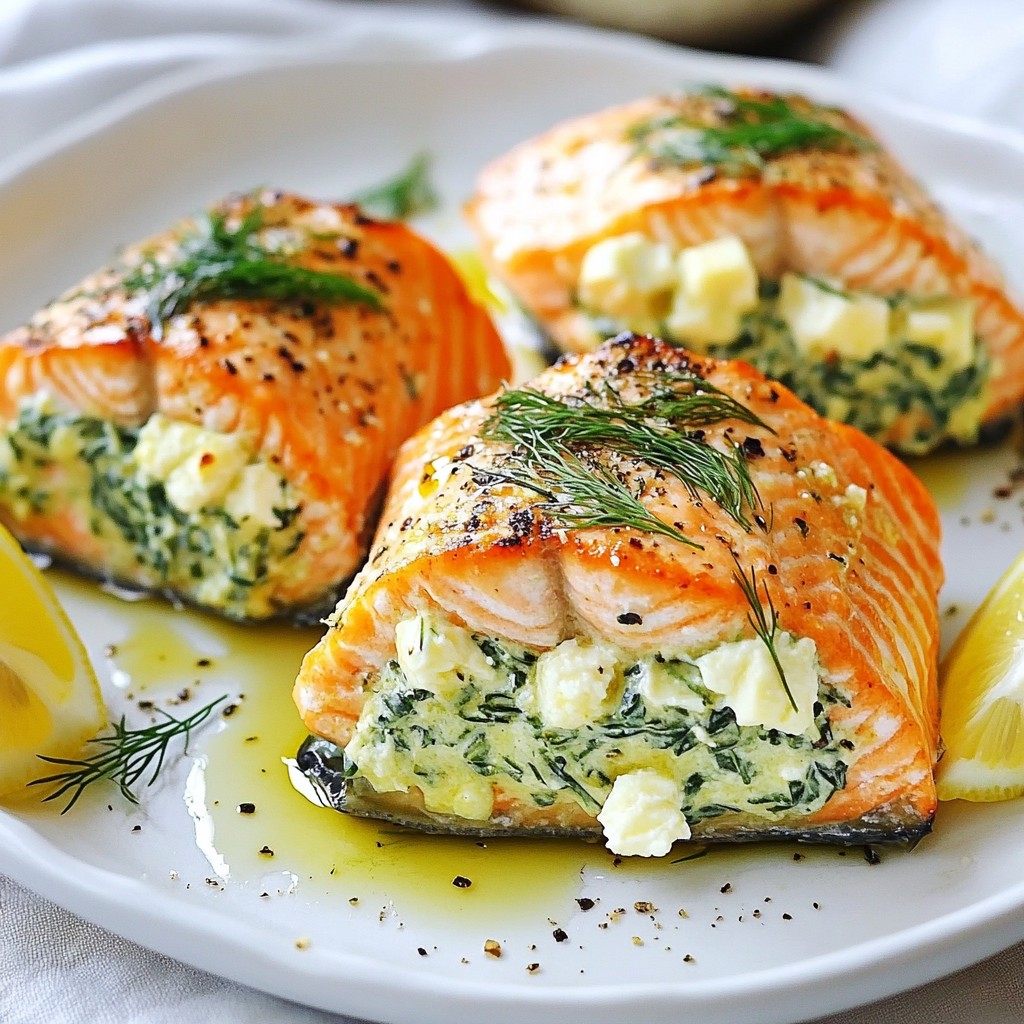
If you're looking for a tasty and easy meal, Spinach Feta Stuffed Salmon is the answer. This dish combines fresh flavors and simple steps, making it perfect for any night. In this post, you'll find clear instructions, helpful tips, and even some variations to play with. Get ready to impress your family and friends with this delightful salmon dish that's healthy and satisfying! Let's dive in!
Why I Love This Recipe
- Healthy and Nutritious: This dish combines the omega-3 fatty acids from salmon with the vitamins and minerals from spinach, making it a wholesome meal option.
- Easy to Prepare: With just a few simple ingredients and straightforward steps, this recipe is perfect for both novice and experienced cooks.
- Flavorful Filling: The creamy spinach and feta filling adds a delicious flavor profile that complements the salmon beautifully.
- Impressive Presentation: Stuffed salmon looks gourmet and is sure to impress your guests, making it an ideal dish for dinner parties.
Ingredients
List of Ingredients
To make Spinach Feta Stuffed Salmon, gather these fresh ingredients:
- 4 salmon fillets (approximately 6 oz each)
- 1 cup fresh spinach, finely chopped
- 1/2 cup feta cheese, crumbled
- 1/4 cup cream cheese, softened
- 2 cloves garlic, minced
- 1 tablespoon extra virgin olive oil
- 1 tablespoon lemon juice
- 1 teaspoon dried dill
- Sea salt and ground pepper, to taste
- Lemon wedges, for serving
Optional Ingredients for Enhanced Flavor
You can add a few extras to boost your dish:
- Chopped sun-dried tomatoes for a tangy bite
- Fresh herbs like parsley or basil for added freshness
- A sprinkle of red pepper flakes for heat
- A dash of smoked paprika for a smoky flavor
Health Benefits of Key Ingredients
This dish offers tasty benefits:
- Salmon is rich in omega-3 fatty acids, promoting heart health.
- Spinach provides iron, vitamins, and antioxidants, supporting overall wellness.
- Feta cheese adds flavor and calcium, good for bones.
- Garlic boosts the immune system and adds a savory taste.
- Olive oil is a healthy fat, great for cooking and flavor.
These ingredients not only taste great together but also help you feel good!

Step-by-Step Instructions
Preparing the Salmon Fillets
First, preheat your oven to 375°F (190°C). This will ensure even cooking. Take your salmon fillets and place them skin-side down on a cutting board. Use a sharp knife to make a slit along the side of each fillet. Create a pocket, but don’t cut all the way through. This pocket is where you will stuff the filling.
Making the Spinach and Feta Filling
In a medium bowl, mix the chopped spinach, crumbled feta cheese, and softened cream cheese. Add minced garlic, olive oil, lemon juice, dried dill, salt, and pepper. Stir the mixture well until it is creamy. This filling will bring a burst of flavor to your salmon.
Cooking Methods and Times
Once your salmon is stuffed, place the fillets on a baking sheet lined with parchment paper. This prevents sticking. Bake the salmon in the preheated oven for 15-20 minutes. The salmon is done when it flakes easily with a fork. Right before serving, squeeze fresh lemon juice over each fillet. This adds a refreshing touch to the dish.
Tips & Tricks
How to Select Fresh Salmon
When you buy salmon, look for bright, shiny skin. The flesh should be firm and moist. Check for a fresh smell, like the sea, not fishy. Ask your fishmonger about its source. Wild-caught salmon usually tastes best. Choose fillets with no dark spots or dry edges.
Common Mistakes to Avoid
One mistake is overcooking the salmon. Keep an eye on the time. Cook until it flakes easily with a fork. Another mistake is not seasoning well. Use salt and pepper generously for flavor. Lastly, don’t overstuff the salmon. This can cause the filling to spill out while cooking.
Best Practices for Stuffing Salmon
First, make a nice pocket in the fillet. Use a sharp knife, but don’t cut all the way through. Next, pack the filling tightly. This helps keep the flavors inside. Arrange the stuffed salmon on a lined baking sheet. This prevents sticking and makes cleanup easy. Lastly, squeeze lemon juice on top before serving. This adds freshness and boosts flavor.
Pro Tips
- Choose Fresh Salmon: Opt for fresh, high-quality salmon fillets for the best flavor and texture. Look for vibrant color and avoid any fish with a strong, fishy smell.
- Perfect Stuffing: Ensure the spinach and feta mixture is creamy, but not too runny. This will help keep the stuffing in place and enhance the overall texture of the dish.
- Use a Meat Thermometer: To ensure your salmon is perfectly cooked, use a meat thermometer. The internal temperature should reach 145°F (63°C) for safe consumption.
- Experiment with Herbs: Feel free to add other herbs like parsley or basil to the stuffing for a unique twist. Fresh herbs can elevate the flavors and add complexity to the dish.
Variations
Alternative Cheese Options
You can change the cheese for different tastes. Cream cheese adds creaminess, while goat cheese gives a tangy flavor. If you want a sharper taste, try aged cheddar. Each cheese adds its own twist. Experimenting with cheese can change the whole dish!
Adding Vegetables to the Filling
Mixing in extra veggies can boost flavor and nutrition. Chopped sun-dried tomatoes give a sweet touch. You can also add diced bell peppers for crunch. Even artichokes can work well. These add color and make the filling more exciting. More veggies mean more goodness in every bite!
Cooking on the Grill vs. Baking
You can cook stuffed salmon in two main ways. Baking is easy and keeps the fish moist. Just follow the recipe's oven steps. Grilling adds a smoky flavor and nice char. To grill, wrap the salmon in foil to avoid sticking. Both methods yield tasty results, so choose your favorite!
Storage Info
How to Store Leftover Stuffed Salmon
To store leftover stuffed salmon, let it cool first. Place the salmon in an airtight container. You can keep it in the fridge for up to 3 days. Make sure to cover it well to keep it fresh. If you want to enjoy it later, freezing is a great option.
Reheating Instructions
When you want to reheat the salmon, use the oven for the best taste. Preheat the oven to 350°F (175°C). Place the salmon on a baking sheet and cover it with foil. Heat for about 10-15 minutes or until warm. You can also use a microwave, but it may not taste as good. If you use the microwave, heat in short bursts to avoid drying it out.
Freezing Tips
If you plan to freeze the stuffed salmon, wrap each piece tightly in plastic wrap. Then, place them in a freezer bag or container. Make sure to remove as much air as possible. This helps prevent freezer burn. You can freeze the salmon for up to 2 months. When you're ready to eat, thaw it in the fridge overnight before reheating.
FAQs
What can I serve with Spinach Feta Stuffed Salmon?
You can serve many tasty sides with stuffed salmon. Here are some great options:
- Steamed vegetables like broccoli or asparagus
- A fresh garden salad with lemon vinaigrette
- Quinoa or brown rice for a healthy grain
- Mashed potatoes or a light potato salad
- Roasted or baked sweet potatoes for a sweet touch
Each of these sides adds color and flavor to your plate. They also balance the rich taste of the salmon.
How do I know when the salmon is cooked properly?
To check if your salmon is done, look for a few signs:
- The fish should turn a light pink color.
- It should flake easily when you use a fork.
- The internal temperature should reach 145°F (63°C).
Using a meat thermometer helps you get it just right. This ensures your salmon is safe and delicious to eat.
Can I use frozen salmon for this recipe?
Yes, you can use frozen salmon! Just follow these steps:
- Thaw the salmon in the fridge overnight.
- If you're short on time, you can also thaw it in cold water for about an hour.
Using frozen salmon can be just as tasty. Just make sure it is fully thawed before you stuff and cook it.
This blog post covered how to make spinach feta stuffed salmon. You learned about ingredients, including optional ones for better flavor. We discussed health benefits and the right preparation steps. I shared tips on selecting fresh salmon and avoiding common mistakes. You explored variations for personal taste and found storage and reheating advice.
In conclusion, making this dish is simple and fun. Enjoy creating your own tasty version!