
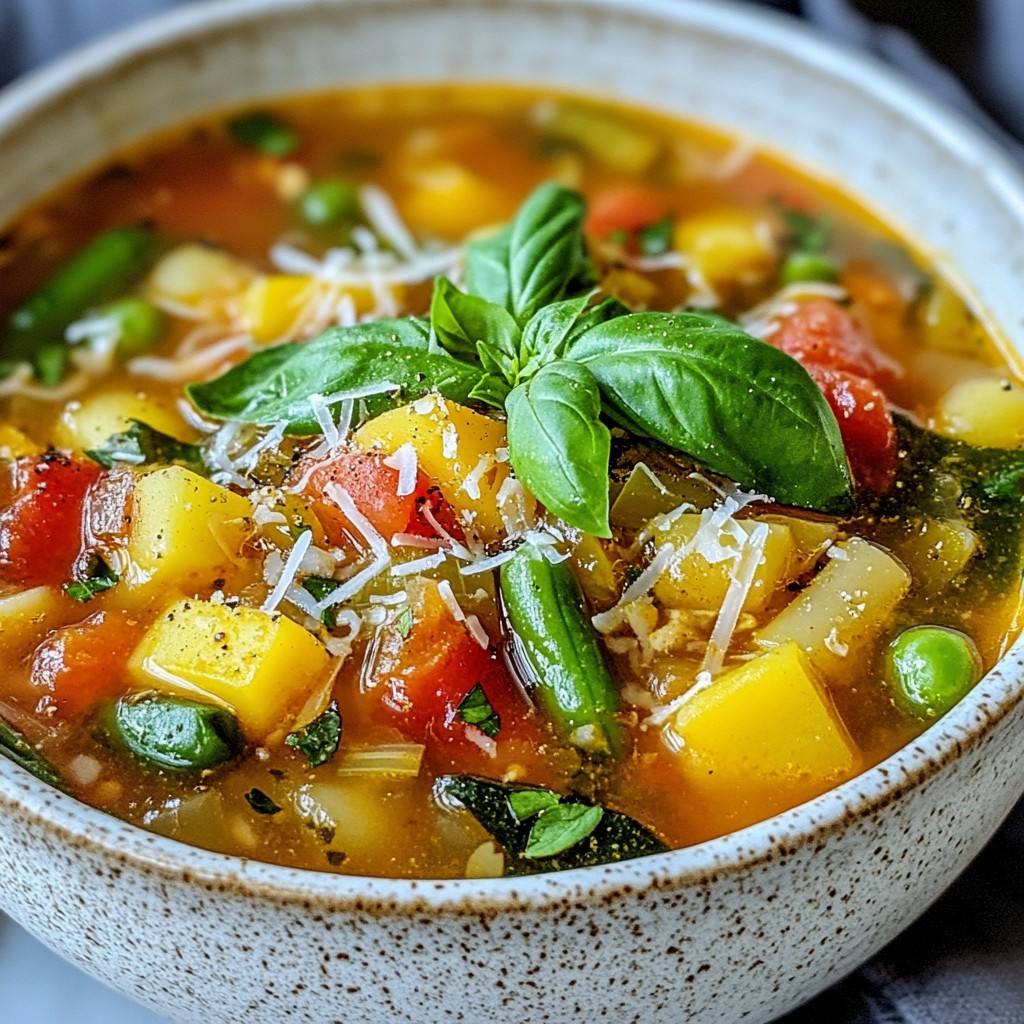
Looking for a warm, hearty meal that’s loaded with veggies? This Veggie Packed Minestrone Soup is your answer! I’ll guide you step-by-step through the process, sharing tips on customization and flavor enhancement. From substitutions to freezing tips, this soup is not just good- it’s healthy and delicious. Get ready to fill your bowl with a dish that’s both comforting and nutritious! Let’s get cooking!
Why I Love This Recipe
- Fresh Ingredients: This minestrone soup is a celebration of garden-fresh vegetables that add vibrant colors and nutrients to each bowl.
- Customizable: You can easily swap in your favorite vegetables or beans, making it a versatile recipe for any season.
- Hearty and Healthy: This soup is packed with fiber and protein, making it a filling yet nutritious option for lunch or dinner.
- Comforting Flavor: The combination of herbs and the umami from the tomatoes creates a warm, inviting flavor that feels like a hug in a bowl.
Ingredients
Full list of ingredients
To make veggie-packed minestrone soup, gather these fresh and tasty ingredients:
- 2 tablespoons extra virgin olive oil
- 1 medium yellow onion, diced
- 2 cloves garlic, minced
- 2 medium carrots, diced
- 2 celery stalks, diced
- 1 medium zucchini, diced
- 1 cup green beans, trimmed and cut into 1-inch pieces
- 1 can (14 oz) diced tomatoes, including juices
- 4 cups low-sodium vegetable broth
- 1 can (15 oz) cannellini beans, rinsed and drained
- 1 cup fresh spinach, roughly chopped
- 1 teaspoon dried oregano
- 1 teaspoon dried basil
- Sea salt and freshly cracked black pepper, to taste
- 1 cup small pasta shapes (such as ditalini or shells)
- Grated Parmesan cheese, for topping (optional)
Substitutions for common ingredients
If you need to swap an ingredient, here are some ideas:
- Olive oil: Use avocado oil or coconut oil.
- Yellow onion: A white onion or shallots work well.
- Garlic: Garlic powder can be used in a pinch.
- Carrots and celery: You can use any root veggies you have on hand.
- Zucchini: Try yellow squash or bell peppers instead.
- Green beans: Snap peas or peas can be a great substitute.
- Diced tomatoes: Fresh tomatoes can replace canned ones.
- Cannellini beans: Any white bean like navy or great northern beans works.
- Spinach: Kale or Swiss chard can also be used.
- Small pasta shapes: Use any type of pasta you prefer.
Nutritional information per serving
This soup packs in nutrition! Each serving of veggie-packed minestrone has:
- Calories: 200
- Protein: 8g
- Fat: 4g
- Carbohydrates: 36g
- Fiber: 8g
- Sugars: 4g
- Sodium: 300mg
This soup is filling and full of vitamins. It helps you meet your daily veggie needs. Enjoy this hearty and healthy dish!

Step-by-Step Instructions
Preparation steps for the soup
1. Gather your tools. You need a large pot, a cutting board, and a knife.
2. Chop the vegetables. Dice the onion, carrots, celery, and zucchini. Mince the garlic too.
3. Trim the green beans. Cut them into 1-inch pieces. This helps them cook evenly.
4. Measure other ingredients. Open the can of diced tomatoes and the cannellini beans. Rinse the beans.
5. Prepare the broth. Have your low-sodium vegetable broth ready for the soup.
Cooking techniques to enhance flavor
1. Start with oil. Heat the extra virgin olive oil in your pot over medium heat. This adds depth.
2. Sauté onions first. Add the diced onion and cook for about 3-4 minutes. Wait for it to turn translucent.
3. Layer flavors. Add garlic, carrots, and celery next. Cook for 5 minutes until tender. This builds a great base.
4. Add more veggies. Stir in zucchini and green beans. Cook another 3-4 minutes. This keeps them crisp and fresh.
5. Incorporate tomatoes and broth. Pour in the diced tomatoes and broth. Bring it to a gentle boil for best flavor.
6. Season well. Stir in the rinsed beans, fresh spinach, oregano, and basil. Taste and adjust seasoning as needed.
Tips for al dente pasta preparation
1. Choose your pasta. Use small shapes like ditalini or shells for best results.
2. Cook separately. Boil the pasta in a separate pot according to package instructions. This keeps it from overcooking.
3. Rinse immediately. Drain and rinse the pasta under cold water. This stops the cooking process and keeps it firm.
4. Add before serving. Mix the pasta into the soup just before serving. This keeps it perfectly al dente and ready to enjoy.
Tips & Tricks
How to customize flavor and ingredients
You can change the flavor of your minestrone soup easily. Use fresh herbs like thyme or parsley for a bright taste. If you like heat, add red pepper flakes. For a richer flavor, stir in a splash of balsamic vinegar. You can also swap in seasonal veggies, like peas or bell peppers. Try using different beans, like kidney or black beans, for a twist.
Best practices for achieving texture
Texture plays a big role in soup. To keep veggies crisp, don’t overcook them. Add spinach and pasta at the end. This way, they stay vibrant and firm. If you want a creamier soup, blend a portion of it. This adds body without losing all the chunky goodness. Be sure to balance soft and crunchy ingredients for the best experience.
Time-saving kitchen hacks
Use these tips to save time while cooking. Prep your veggies ahead. Chop them the night before and store in the fridge. You can also use a food processor for quick dicing. If you're short on time, canned beans and tomatoes work well. They cut down cooking time, letting you enjoy your soup faster. Always have vegetable broth on hand for quick meals.
Pro Tips
- Use Fresh Herbs: Add fresh basil or parsley just before serving for a burst of flavor and vibrant color.
Variations
Vegan and gluten-free adaptations
To make this minestrone soup vegan, simply skip the Parmesan cheese. You can also use gluten-free pasta. Many stores sell gluten-free ditalini or shells. For the broth, choose a vegan option. This way, everyone can enjoy the soup, no matter their diet.
Adding protein sources (chicken, turkey, etc.)
If you want to add protein, consider cooked chicken or turkey. You can use leftover roast chicken for a quick option. Just shred it and stir it in when you add the beans. You can also add cooked sausage for a different flavor. Just slice it and cook it with the veggies at the start.
Creative twists (like adding different vegetables)
Feel free to get creative with your veggies! You can use kale instead of spinach. Try adding bell peppers for sweetness. Sweet corn can add a nice crunch too. If you have other veggies in your fridge, toss them in! Minestrone soup is all about using what you have.
Storage Info
How to store leftovers properly
After enjoying your veggie-packed minestrone soup, store leftovers in an airtight container. Let the soup cool to room temperature first. This step keeps the soup fresh and tasty. Place it in the fridge for up to 3 days. Make sure to label the container with the date. This way, you’ll know when to eat it by.
Freezing guidelines for longer storage
If you want to save some for later, freezing is a great option. First, let the soup cool completely. Then, pour it into freezer-safe containers. Leave some space at the top since soup expands when frozen. You can also use freezer bags. Just squeeze out the air before sealing. The soup stays good for about 3 months in the freezer. Remember to label it with the date for easy tracking.
Reheating tips to maintain flavor and texture
When you're ready to enjoy your soup again, gently reheat it on the stove. Pour the soup into a pot and heat it over medium-low. Stir it often to avoid sticking. If the soup is too thick, add a splash of vegetable broth or water. This helps return its lovely texture. You can also microwave it, but stir halfway to heat evenly. Enjoy your comforting soup like it was just made!
FAQs
Can I use fresh vegetables instead of canned?
Yes, you can use fresh vegetables! Fresh veggies add great taste and texture. Just chop and prepare them as you would the canned ones. For example, use fresh tomatoes instead of canned ones. You can also add seasonal veggies like bell peppers or kale. This makes your soup even more colorful and nutritious.
How to make the soup thicker?
To thicken the soup, you have a few options. You can blend part of the soup with an immersion blender. This creates a creamy texture without adding cream. Another method is to add more beans or pasta. Both will soak up some liquid and help the soup become heartier. You can also simmer the soup longer to reduce the liquid.
What are some serving suggestions?
Serve the soup in warm bowls for a cozy meal. Top it with grated Parmesan cheese for added flavor. Fresh basil leaves also make a nice garnish. Consider serving some crusty bread on the side. This helps soak up the tasty broth. You can also pair it with a light salad for a complete meal.
This blog post covered the key ingredients, cooking steps, and tips for the soup. I shared helpful tricks on flavor and texture. You can also adapt the recipe to suit your taste. Remember, leftovers can be stored and reheated for later enjoyment. Explore your options with fresh veggies and creative twists. Cooking should be fun and easy. Try this soup out and make it your own! Enjoy the tasty results.