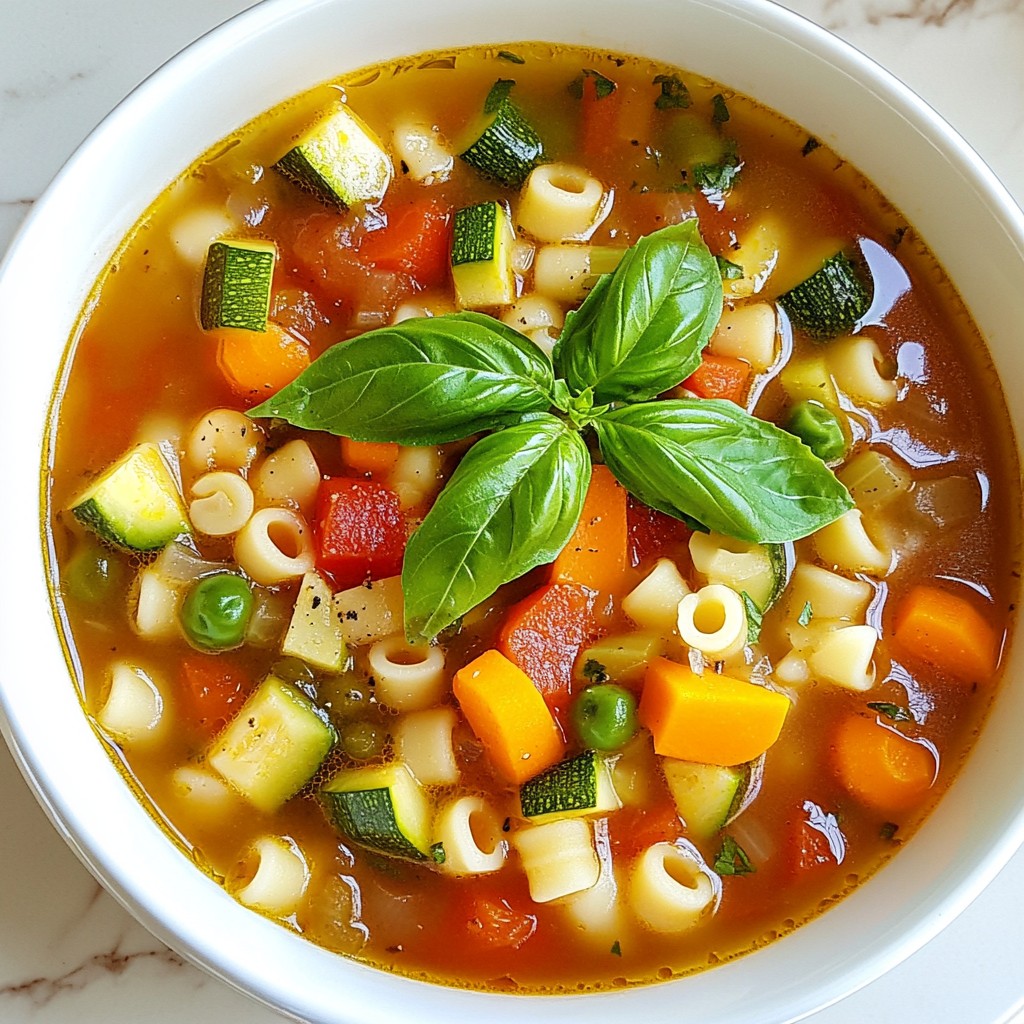
Are you ready to enjoy a warm bowl of veggie-packed goodness? My Veggie Packed Minestrone Soup recipe is simple, tasty, and perfect for any meal. With fresh vegetables and hearty ingredients, this soup is both healthy and satisfying. I’ll guide you step-by-step, ensuring you create a dish that will impress. Let’s dive in and make a comforting minestrone that you’ll want to share with everyone!
Why I Love This Recipe
- Nutritious and Wholesome: This minestrone soup is loaded with a variety of vegetables, ensuring a healthy and nutrient-rich meal.
- Customizable Ingredients: You can easily swap out the vegetables or beans based on what you have on hand, making it versatile for any season.
- Perfect for Meal Prep: This soup stores well in the fridge or freezer, making it a great option for meal prepping and quick lunches.
- Comforting and Satisfying: The combination of flavors and textures creates a warm, hearty soup that’s perfect for any chilly day.
Ingredients
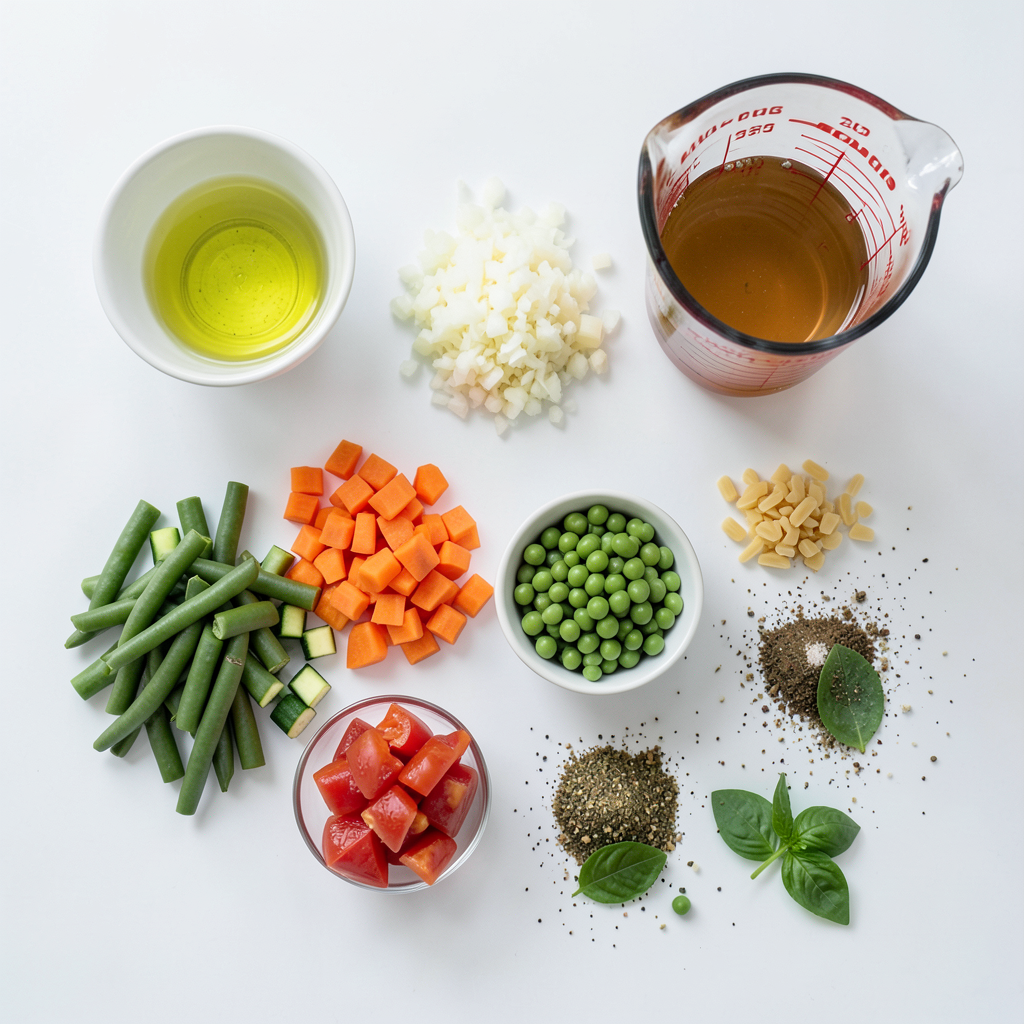
Minestrone soup is all about fresh, vibrant vegetables and hearty flavors. Here’s what you need to create this tasty dish:
- 2 tablespoons extra virgin olive oil
- 1 medium onion, finely chopped
- 2 cloves garlic, minced
- 2 medium carrots, diced into small pieces
- 1 medium zucchini, diced
- 1 red bell pepper, diced
- 1 cup fresh green beans, chopped into bite-sized pieces
- 1 can (14 oz) diced tomatoes in juice
- 4 cups low-sodium vegetable broth
- 1 can (15 oz) kidney beans, rinsed thoroughly and drained
- 1 cup frozen peas
- 1 tablespoon Italian seasoning blend
- Salt and freshly ground black pepper, to taste
- 1 cup small pasta (such as ditalini or elbow macaroni)
- Fresh basil leaves, for garnish
Each ingredient adds its own unique taste and texture. The olive oil is key for sautéing and flavor. Onion and garlic build a strong base. Fresh vegetables bring color and nutrition. Canned tomatoes and broth create a rich soup. Beans add protein and heartiness. Finally, pasta makes it filling. Don't forget the fresh basil for that aromatic finish!
Step-by-Step Instructions
Preparation Steps
Sautéing onion and garlic First, take a large pot and warm 2 tablespoons of olive oil over medium heat. Once the oil is hot, add 1 medium onion, finely chopped, and 2 cloves of minced garlic. Stir them for about 5 minutes. You want the onion to be soft and fragrant.
Adding mixed vegetables Next, add 2 diced carrots, 1 diced zucchini, 1 diced red bell pepper, and 1 cup of chopped green beans to the pot. Stir well and let them cook for another 5 to 7 minutes. This helps the vegetables soften and blend their flavors.
Incorporating tomatoes and broth Now, pour in 1 can of diced tomatoes with their juice, followed by 4 cups of low-sodium vegetable broth. Add 1 can of rinsed kidney beans and 1 cup of frozen peas. Sprinkle in 1 tablespoon of Italian seasoning, and season with salt and pepper to taste. Stir everything together.
Cooking Process
Boiling and simmering the soup Increase the heat and bring the soup to a gentle boil. Once it starts boiling, reduce the heat to low. Let it simmer uncovered for about 15 minutes. This allows the flavors to meld nicely.
Adding pasta After simmering, stir in 1 cup of small pasta, like ditalini or elbow macaroni. Cook according to package instructions, usually 8 to 10 minutes, until the pasta is al dente.
Final seasoning adjustments Before you serve, taste the soup. Adjust the seasoning with more salt or pepper if you need it. Ladle the hot soup into bowls and finish with fresh basil leaves for a nice touch. Enjoy your tasty veggie-packed minestrone!
Tips & Tricks
Cooking Tips
- Optimal sautéing for flavor: Start by heating the olive oil in a large pot. Add the chopped onion and minced garlic. Cook them for about five minutes. This softens the onion and brings out its sweet flavor. The garlic adds a nice aroma.
- Perfect pasta cooking time: Add the small pasta once the soup has simmered for 15 minutes. Cook the pasta according to the package instructions, usually around 8 to 10 minutes. This way, your pasta stays al dente and does not get mushy.
Serving Suggestions
- Presentation tips for vibrant serving: Serve your soup in wide bowls to show off the colorful veggies. This makes your dish look more inviting. Drizzle a little extra virgin olive oil on top for a glossy finish.
- Suggested toppings for enhanced flavor: Finish your soup with freshly cracked black pepper and fresh basil leaves. These add bright flavor and make the dish look appealing.
Customization Options
- Vegetable substitutions: Feel free to swap out any veggies you don’t like. You can use spinach, kale, or even sweet corn. This allows you to tailor the soup to your taste.
- Gluten-free pasta options: If you need a gluten-free version, use brown rice or quinoa pasta. They work well in this soup and still taste great.
Pro Tips
- Fresh Vegetables Matter: Using fresh, seasonal vegetables will enhance the flavor and nutritional value of your minestrone soup.
- Customize Your Beans: Feel free to swap out kidney beans for other beans like cannellini or garbanzo for a different texture and taste.
- Simmer for Flavor: Allowing the soup to simmer longer will deepen the flavors, so don’t rush the cooking process!
- Perfect Pasta: To prevent the pasta from becoming mushy, add it towards the end of cooking and cook it just until al dente.
Variations
Adding Proteins
You can boost your minestrone soup with proteins. Adding chicken or tofu is an easy way. Cut chicken into small pieces and sauté it with the onions. For tofu, use firm tofu. Cube it and add it when you add the vegetables. Both options add flavor and texture.
You can also switch up the beans. Instead of kidney beans, use black beans or chickpeas. This keeps your soup fresh and exciting. Each bean adds its own taste and texture.
Spice and Heat
To give your soup a kick, add crushed red pepper. This spice can change the flavor. Start with a small amount and taste as you go. Adjust until it reaches your desired heat level.
You can also use different herbs. Try fresh thyme or oregano instead of Italian seasoning. These herbs change the taste and can match the season. Always taste before serving to ensure the flavors blend well.
Seasonal Variations
You can change your minestrone soup with the seasons. In summer, use fresh vegetables like corn and tomatoes. These bright flavors enhance the soup’s taste.
In winter, use heartier vegetables. Think about using squash or root vegetables. These add warmth and comfort to your bowl. Adjust your soup to match what is fresh and in season.
Storage Info
Refrigeration Guidelines
To store your veggie-packed minestrone soup properly, wait for it to cool down. Once cool, pour it into airtight containers. This keeps the soup fresh and tasty. In the fridge, it lasts about 3 to 4 days. If you want to save some for later, make sure it’s sealed well to avoid spills.
Freezing Instructions
You can freeze minestrone soup for later use. To do this, divide the soup into portions. Use freezer-safe containers or bags, and leave some space for the soup to expand. This soup can be frozen for about 2 to 3 months. When you’re ready to eat, take out a portion and thaw it in the fridge overnight. To reheat, warm it on the stove over low heat. Stir occasionally to avoid sticking. Enjoy your delicious soup again!
FAQs
What is a minestrone soup?
Minestrone soup is a hearty Italian dish. It is full of vegetables, beans, and pasta. The origins of this soup date back to ancient Rome. Cooks made it with whatever they had on hand. Today, it is known for its rich flavors and healthy ingredients.
Can I make this soup vegetarian or vegan?
Yes, you can easily make this soup vegetarian or vegan. To make it vegetarian, just use vegetable broth. For a vegan option, ensure that any added cheese is omitted. You can also add more vegetables or beans for extra flavor.
How can I make the soup thicker?
To thicken the broth, you have a few options. You can blend a portion of the soup and stir it back in. Adding more pasta will also help. Another option is to add a small amount of mashed beans. This will give the soup a nice, hearty texture.
This blog post covered how to make a delicious minestrone soup. You learned about key ingredients like fresh vegetables, beans, and pasta. I shared step-by-step instructions, tips for better flavor, and ways to customize your soup. You can also explore various protein options and seasonal changes to keep it exciting.
In closing, making soup is simple and fun. With a few quality ingredients, you can create a warm, tasty dish. Enjoy it today and share your own twists!