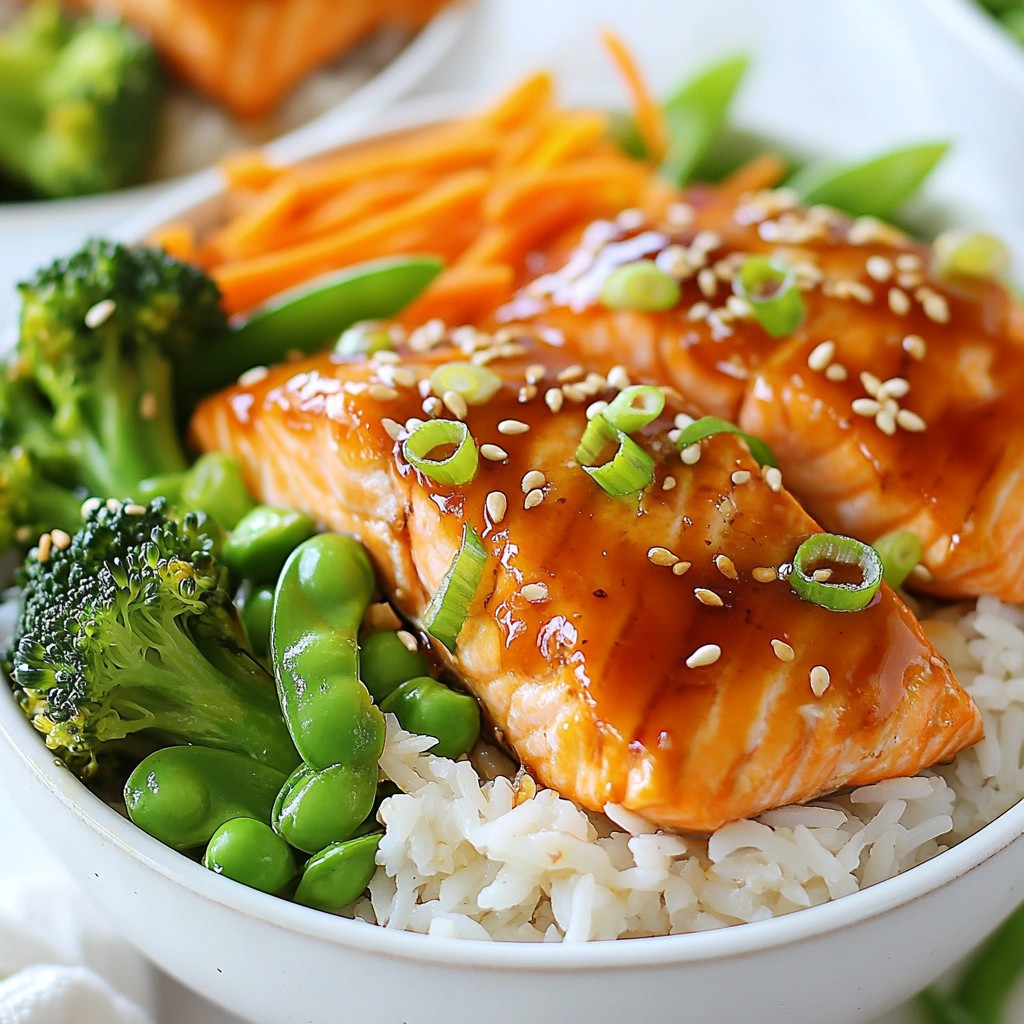
Craving a delicious and healthy meal? Look no further than these Baked Teriyaki Salmon Bowls! These bowls combine tender salmon with a rich teriyaki glaze, served over rice and fresh veggies. With simple ingredients and easy steps, you’ll impress your family or guests in no time. Plus, I’ll share tips, variations, and storage information to make this meal your new favorite. Ready to dive in? Let’s get cooking!
Why I Love This Recipe
- Healthy and Delicious: This recipe combines the rich flavors of teriyaki salmon with fresh vegetables, making it not only tasty but also nutritious.
- Quick and Easy: With a total preparation time of just 30 minutes, this dish is perfect for busy weeknights.
- Customizable: You can easily swap out the vegetables or rice type to suit your taste preferences or dietary needs.
- Beautiful Presentation: The vibrant colors from the vegetables and the elegant arrangement create an appealing dish that looks as good as it tastes.
Ingredients
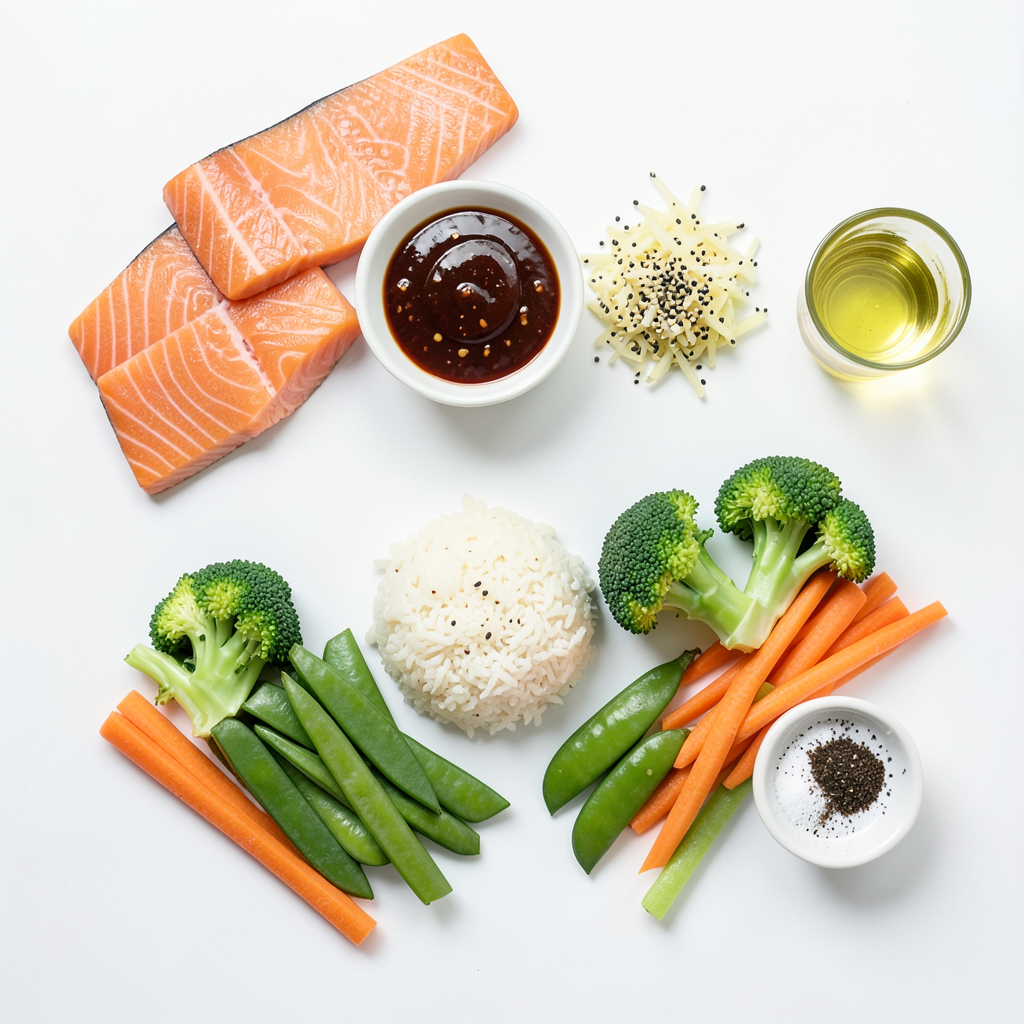
Salmon Fillets
For this dish, you will need 4 salmon fillets. Each fillet should weigh about 6 ounces. Salmon is rich in omega-3 fatty acids, which are great for your heart. It gives the dish a lovely flavor and texture.
Teriyaki Sauce
You need 1/4 cup of teriyaki sauce. You can use store-bought or make your own. The sauce adds a sweet and salty taste that pairs well with the salmon. It also gives the dish a beautiful glaze.
Rice Options
You will use 2 cups of cooked rice. You can choose from white, brown, or jasmine rice. Each type brings its own flavor and texture. Brown rice offers a nuttier taste, while jasmine rice is light and fragrant.
Vegetables and Garnishes
This dish includes a colorful mix of vegetables. You will need:
- 1 cup broccoli florets, freshly cut
- 1 cup snap peas, trimmed
- 1/2 cup carrots, julienned
- 2 green onions, finely sliced
- 1 tablespoon sesame seeds (toasted, if preferred)
These veggies add crunch and nutrition. Green onions and sesame seeds make great garnishes, adding both look and flavor. Use fresh ingredients for the best taste.
Step-by-Step Instructions
Preheating the Oven
First, I set my oven to 400°F (200°C). This high heat ensures the salmon cooks evenly and quickly. Preheating is key for a great dish.
Preparing the Salmon
Next, I grab a small mixing bowl. I add 1/4 cup of teriyaki sauce, a pinch of salt, and freshly ground pepper. This mix will flavor the salmon nicely. I place the four salmon fillets in a baking dish. Then, I pour the sauce over them, making sure each fillet is well coated.
Baking the Salmon
Once the oven is ready, I put the baking dish inside. I bake the salmon for 12 to 15 minutes. I check for doneness by using a fork to see if it flakes easily. Perfectly cooked salmon is a joy to eat!
Sautéing the Vegetables
While the salmon bakes, I heat 2 tablespoons of olive oil in a large skillet over medium heat. I add 1 cup of broccoli florets, 1 cup of snap peas, and 1/2 cup of julienned carrots. I sauté the mix for about 5 to 7 minutes. I stir often until the veggies are tender but still crisp. A sprinkle of salt and pepper adds great flavor.
Resting the Salmon
After baking, I take the salmon out of the oven. I let it rest for about one minute. This step helps keep the salmon moist and tasty.
Assembling the Bowls
For assembly, I start with a base of 2 cups of cooked rice in each bowl. I carefully place a piece of teriyaki salmon on top of the rice. I then add a generous amount of sautéed vegetables beside the salmon. This makes the bowl colorful and inviting.
Adding Final Touches
To finish, I sprinkle sliced green onions over the bowls. I also add toasted sesame seeds for crunch. Finally, I drizzle any leftover teriyaki sauce from the baking dish over the bowls. This step boosts the flavor and makes it look beautiful.
Tips & Tricks
Achieving the Perfect Salmon Texture
To get the best salmon texture, start with fresh fillets. Look for bright color and a firm feel. When you bake, keep an eye on the time. Bake your salmon for 12-15 minutes at 400°F. This ensures it cooks through but stays moist. If you have a meat thermometer, aim for 145°F in the thickest part. Let your salmon rest for a minute after baking. This keeps it juicy and tender.
Vegetable Cooking Tips
The right veggies make this dish shine. I love using broccoli, snap peas, and carrots. They add color and crunch. When sautéing, heat olive oil over medium heat. Add your veggies and stir often for 5-7 minutes. You want them tender but still crisp. Season with salt and pepper to taste. For added flavor, you can try garlic or ginger while cooking.
Serving Suggestions
Presentation is key for a great meal. Start with a base of rice in each bowl. Place a salmon fillet on top. Next, add those vibrant sautéed veggies. For the finishing touch, sprinkle green onions and sesame seeds over everything. This adds flavor and a nice look. If you have extra teriyaki sauce, drizzle it on top for more taste. Enjoy your colorful, healthy bowl!
Pro Tips
- Choosing the Right Salmon: For the best flavor and texture, opt for wild-caught salmon if available. It's often richer in flavor and omega-3 fatty acids compared to farmed salmon.
- Perfect Rice Cooking: Ensure your rice is fluffy by rinsing it under cold water until the water runs clear. This removes excess starch and prevents it from becoming gummy.
- Vegetable Variety: Feel free to mix in other vegetables like bell peppers or zucchini for added color and nutrition. Just make sure to cut them into similar sizes for even cooking.
- Storage Tips: Store any leftovers in an airtight container in the refrigerator for up to 2 days. Reheat gently in the microwave to keep the salmon moist.
Variations
Brown Rice vs. White Rice
You can choose brown rice or white rice for your bowl. Brown rice has a nutty flavor and a chewy texture. It is also higher in fiber and nutrients. White rice is soft and has a mild taste. It cooks faster and is a classic choice. If you want a healthier option, go for brown rice. If you prefer a lighter meal, stick with white rice.
Alternate Vegetables
Feel free to mix up the veggies in your bowl. Instead of broccoli, try bell peppers or zucchini. These vegetables add a sweet crunch. You can also use spinach or kale for more greens. Carrots and snap peas bring color and texture. Use whatever you enjoy. Just make sure to sauté them until they are tender-crisp.
Add-Ins for Extra Flavor
Want to boost the taste? Here are some great add-ins. You can sprinkle toasted sesame seeds on top for a nutty crunch. Add a dash of chili flakes for heat. A squeeze of lime juice adds brightness. You can also mix in some pineapple chunks for a sweet twist. Experiment with your favorite flavors to make the dish your own.
Storage Info
Refrigeration Guidelines
You can store leftover baked teriyaki salmon bowls in the fridge. Keep them in an airtight container. They stay fresh for up to three days. Make sure to separate the rice from the salmon and veggies to keep them from getting soggy.
Freezing Instructions
To freeze the bowls, place them in freezer-safe containers. You can freeze the salmon and veggies together. Rice can be frozen separately. This way, they stay fresh for up to three months. Be sure to label the containers with the date.
Reheating Tips
When reheating, it’s best to use the oven or a microwave. For the oven, warm the bowl at 350°F (175°C) for about 15 minutes. If using a microwave, heat in short bursts of 1-2 minutes. Stir occasionally to ensure even heating. Always check if the salmon is heated fully before serving. This keeps it safe and tasty.
FAQs
Can I use frozen salmon for this recipe?
Yes, you can use frozen salmon. Just ensure it is fully thawed before cooking. Thaw it overnight in the fridge or use the quick method under cold water. This helps keep the texture nice and tender.
How long does the teriyaki sauce last?
Teriyaki sauce can last about a week in the fridge once opened. If you make it fresh, it should stay good for about a week too. Store it in an airtight container to keep it fresh.
What can I substitute for teriyaki sauce?
You can use soy sauce mixed with honey or maple syrup as a substitute. This mix gives you a sweet and salty taste. Another option is to use a store-bought Asian sauce that you enjoy.
Is this recipe gluten-free?
This recipe is not gluten-free if you use regular teriyaki sauce. Many teriyaki sauces contain soy sauce, which has gluten. To make it gluten-free, choose a gluten-free teriyaki sauce. Always check labels for hidden gluten ingredients.
This blog post covered essential ingredients like salmon fillets, teriyaki sauce, and rice options. I shared step-by-step instructions for baking the salmon and sautéing vegetables. Key tips helped achieve a great texture and new flavors through variations. Understanding storage and addressing common FAQs prepares you for success.
With these tools, you can create a delicious meal. Enjoy making your teriyaki salmon bowls!